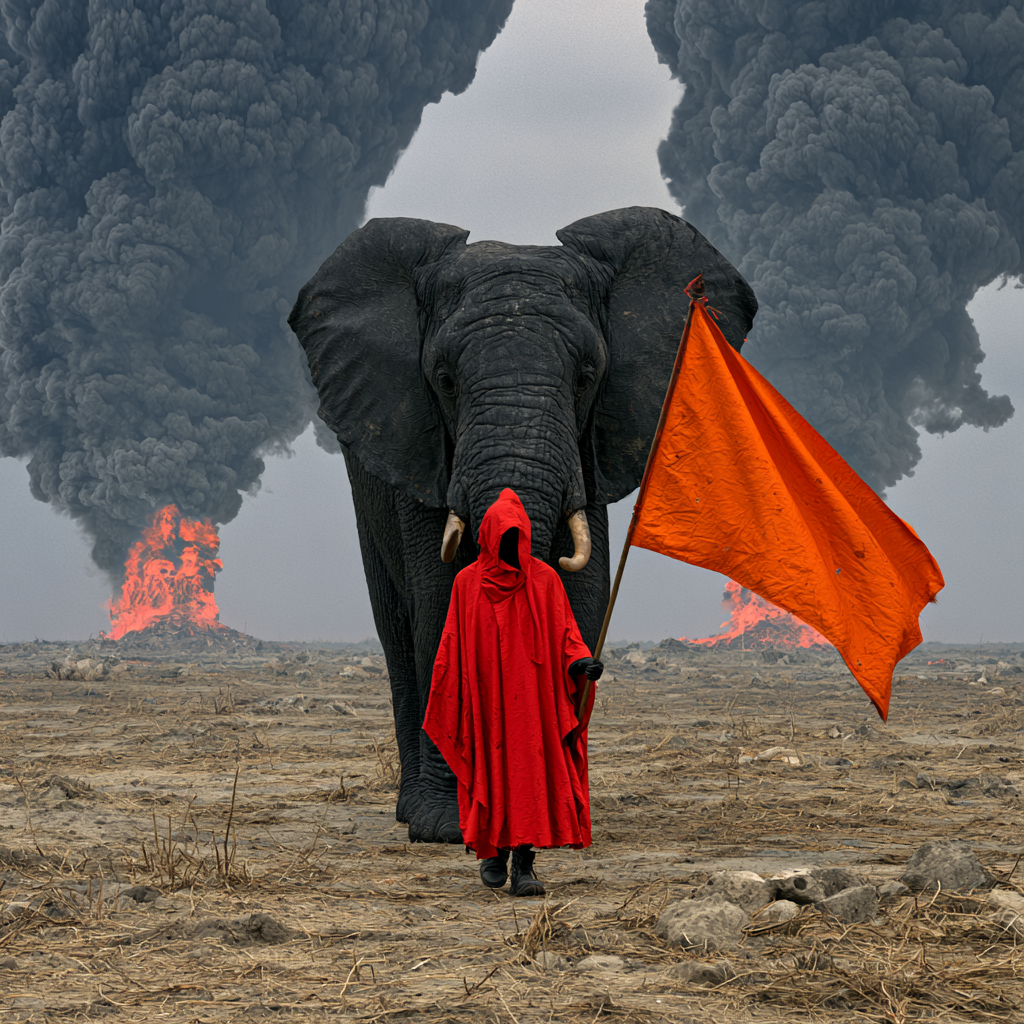
It’s not just you: the world is scarier today than it was 30 years ago because history has restarted, but the antidote to the fear of living in historically important times is pretty simple: Pick 1-2 problems you see and work on them. Don’t let yourself get depressed that you have to confront these evils or that you don’t feel capable of becoming the next Gandhi. You will be great in the eyes of those around you if you just take a stand on one or two topics and remain consistent.
In 1992, political scientist Francis Fukuyama published a book titled “The End of History and the Last Man.” In it, he made three arguments:
The end of history. Taking inspiration from the philosopher Hegel, he argued that history has a clear direction and leads to societies like the US: a modern market economy with a liberal democratic government.
No competitors. The fall of the Soviet Union was a monumental ideological victory for the west. At the time, it seemed as though there was no viable economical or social alternative to western liberal democracy. America had won, and its victory was complete.
The last man. Nietzsche proposed the idea of a “last man” who had all of their material needs met and who therefore lacked ambition or resolve to accomplish important work. Fukuyama asserted that Nietzsche’s “last man” was now an apt description of most people living in the west.
These points were radical for the time. Many American adults in the early 1990s had come of age in the aftermath of World War 2. Many had fought in Korea, witnessed the bloody civil rights movement, endured the imminent threat of nuclear annihilation, saw the horrors of war in Vietnam, nearly lost a space race, and suffered a humiliating lost decade to inflation and domestic terror campaigns in the 1970s. Despite all that, their system had won. And their victory seemed total.
The end of history was a time to relax, raise a family, and focus on the here and now.
Growing Up Without History
I was among the first generation to be raised in this history-less era and I was ridiculously privileged to experience a concentrated version of that stability:
Stable family life. My parents were loving and attentive and I was raised with almost no material wants.
Safe community. I grew up in a small, safe town in the midwestern US, comfortably away from social ills of the time like rust belt decline and drug abuse.
Increasingly stable world. Outside of my bubble, there were wars, genocides, and atrocities, but at a macro level, the world was rapidly becoming better for many people (see Factfulness by Hans Rosling).
Defense hawks in the US were under sustained pressure from a broad coalition of groups to cut spending and demilitarise. There hadn’t been a major war recently and with the Soviet Union neutralized, the horizon seemed clear of dark clouds.
To the extent that people thought about Russia, it was mainly in the context of villains in James Bond movies. All the Russians I met in real life were charming academic types who had immigrated for better jobs, had funny accents, and would say impolite things out loud to make kids laugh.
Most people welcomed new technology. Who in their right mind could get upset about Super Mario Bros? While Doom and Wolfenstein were starting to cause some concern about violence in video games, mainstream media concern wouldn’t become focused until the late 90s. Even my parents were impressed and intrigued by the internet. My mom forced me to sign up for my first email address (telnet!), stressing just how important the technology was going to be.
Supporting China’s ascendancy into the broader world economic system was the right thing to do to lift people out of poverty. Plus, it wasn’t like China would pose a threat to anyone by manufacturing cheap plastic stuff.
Then there was democracy itself. But what was there to really say about it? It was a victim of its own success and seemed pretty boring and trivial. Politicians lied and said stupid things all the time, but I never really understood the youthful rage of the 1960s. My parents bemoaned how complacent and politically uninvolved me and my friends were, but it made sense. Why get outraged about something that seemed to not only mostly work, but was visibly improving? I attended a hyper-liberal college in the 2000s not because I was a radical leftist but because they offered me a good financial aid package. After my first semester on the drive home, my dad asked me how it was going. I told him things were good, but that many of my peers were all but brandishing pitchforks about the presidency of George Bush Jr. It just seemed blown way out of proportion to me. My dad said he was proud that I had a more moderate picture of things.
History Has Its Eyes On You
I’m not a huge musical theater fan, but I am obsessed with learning about history and I have an abiding passion for rap. So of course I love the musical Hamilton. By the time I listened to the soundtrack for the first time, I’d read the biographies of most of the American founding fathers and had listened to thousands of hours of hip hop.
In one of the songs in the first act of the play, George Washington’s character sings about the sense of dread that he experiences when it dawns on him that history has its eyes on him.
The first time I heard it, a chill ran up my spine. I had recently had my first child and I understood in a moment of harsh, new-father-hormone-infused terror what history really meant for the people that lived through it. I also quickly realized how badly I wanted to live a life that went completely unmentioned in any history books.
Growing up amidst the end of history, I had always assumed that there would be a profound sense of belonging and importance attached to historical struggles. Sure, history was full of adversity, but it was also full of grand narratives that held meaning for the participants. To position oneself in such a narrative must have felt gratifying and meaningful in ways that people of my generation could never truly appreciate.
But in that moment listening to the song from Hamilton, I realized that for most people, the grand narratives and sense of purpose came later, fashioned by strangers for their own selfish and timely purposes. As the lyrics of the song go:
/ Let me tell you what I wish I'd known
/ When I was young and dreamed of glory
/ You have no control
/ Who lives, who dies, who tells your story
Most people want to be left out of the history books, and for good reason.
May You Live In Interesting Times
Several years ago, I attended a family reunion. The pandemic was over, but I was still feeling stressed out by the state of the world. I had young children, climate change was advancing faster than predicted, layoffs were sweeping the tech industry, I had witnessed a violent attempt to prevent a presidential vote certification, there was a land war in Europe underway, China was threatening to make good on their promise to invade Taiwan, I had recently learned that nuclear weapons were even more dangerous than I had assumed, and AI seemed poised to suddenly upend society as I knew it.
I have always been a worrier, so I suspected that all of this concern might just be in my head. What a relief it would be to have my parents talk me off the cliff and relate how all of this was just what it was like to be a middle aged parent.
But when I explained my worries to my dad, he just nodded slowly and said “I think you’re right to be worried about all that.” My mom said this was the scariest time she could remember in her life. My grandmother, who was 91 at the time, got a faraway look in her eyes and said “I’m scared for your generation.”
Well, so much for reassurance.
There is an apocryphal saying, misattributed as an ancient Chinese curse: “may you live in interesting times.” It’s a sarcastic way to tell someone that you wish them stress, despair, and turmoil. The fact that the phrase actually originates from British civil servants in the 1930s makes a lot of sense.
Great power competition is back. Dictators are thriving. Democracy is in retreat. I am convinced that history is back; we live in interesting times.
What You Can Do Today
So what does that mean for you in the here and now?
The most valuable and attainable thing you can do to make the world a better place is to honestly assess the challenges you see, pick one or two, stake out a moral high ground that makes sense to you, and take action. Don’t try to fix all the wrongs. There are too many and you’ll exhaust yourself without achieving much impact in any particular domain.
I’ve chosen 2 areas to focus on: local politics and raising my children to be responsible and caring members of society. Are those fairly boring and mainstream topics? Yup. But they are areas of life I’m intrinsically interested in and where my actions have impact. I’m considering adding a third topic to my stack, but haven’t settled on which one to choose yet. And there’s certainly no shortage of options.
My challenge to you is to overcome the paralyzing fear of witnessing history grind back into gear, pick a couple of areas where you can make a difference, and actually do something about it. Don’t succumb to the narrative that you have to be a great historical figure for your actions to be meaningful. Your parents, children, neighbors, coworkers, and friends live in this world too and they will benefit from your actions in tangible ways.
Thank you to Nick, Alex, and Scott for reviewing this post and helping me clarify my thinking.