Homework Pass Syndrome
When I was a kid, my teachers would sometime issue slips of paper to students as a reward for good behavior. These little decorated slips entitled the owner to escape any given homework assignment. Forgot to do that worksheet? Just turn in your homework pass and you'd get a 100% for that assignment. They were the real life equivalent of a "get out of jail free" card and I coveted them. I would paper clip each homework pass into the relevant class' folder in the front as a comforting reminder that I had a safety net; a rainy day backup plan in case I played video games the night before and forgot to complete my algebra exercises.
I had a privileged childhood and was lovingly prevented from having a job or dealing with real world problems until I was in high school. Before the age of 15, school was my first and only responsibility. So homework passes were even more valuable to me than hard currency would become in late high school. Almost anyone willing to flip burgers at the local McDonalds [1] could earn $20 to spend on Friday night, but only the best students ever built up a homework pass stash. They were socially exclusive in a way that money has never managed to be.
And that's why I developed a problem.
I craved the social affirmation and feeling of freedom that homework passes granted. I was so addicted that I was almost never able to use them. Spending one meant a loss of control. The next time I forgot an assignment or needed a small grade boost, I wouldn't have that little piece of paper to protect me. I finished most classes that had homework pass systems with a neat stack of slips which immediately became useless when I switched teachers.
In college, where homework passes had been phased out, I intentionally built up relationships with my professors to ensure I'd have wiggle room if I bombed the next exam. They'd at least know I tried and cared and in a sea of uncaring undergrads, I learned that building up the reputation of being an earnest, hard working student was more valuable than any homework pass had ever been.
Around this time, I started dating the woman that eventually became my wife. On one of our early dates, I brought up my homework pass addiction.
"You did that too?! I thought I was the only one who hoarded those things!" she exclaimed as though admitting a dark secret. I had found a kindred spirit; another soul whose desire for recognition and safety had reached a pathological level well before adulthood.
But far from being proud of our resourcefulness and hard work, Rebecca and I were ashamed of our sordid past of homework pass curation. The whole purpose of a homework pass was to reward students for good work and allow them a bit of freedom in the future. But paradoxically, the kids most likely to earn them were the least likely to use or enjoy them. During childhood, Rebecca and I had earned the right to take a night off and enjoy ourselves, yet we did the opposite: we doubled down and worked extra hard to avoid having to ever use the privilege. In the end, homework passes became like Tolkien's ring: a possession we clung to at all costs that did nothing but enslave us.
Rebecca and I eventually dubbed this behavior "Homework Pass Syndrome," and made a concerted effort to fight it.
Adults aren't given homework passes, but over-achievers find ways to unhealthily stockpile goods against some imagined future catastrophe. Most adult homework passes are monetary: we max out our 401k and IRA contributions, we obsess about our saving rate, we figure out how to retire at age 30, we build up college funds for our unborn children, we wait to buy a car until we can afford to pay all cash, and we shoot for 50% down payments on our homes. But we Homework Pass Syndrome sufferers also safeguard our future in other ways: we buy gifts for our loved ones ahead of time in case we forget later. We go to professional networking events to meet potential employers when we aren't job searching. We give talks at conferences to build up our resumes. We maintain personal websites, deepen our portfolios, and write books. We do anything we can to minimize the chances that we'll have to stoop too low when we need something from anyone else in the future.
Society awards and applauds these sorts of behaviors, but it's toxic to get carried away in the pursuit of delayed gratification. In middle school, if a class ended and Becca or I had homework passes left over, we would just feel a bit of disappointment and move on. If we forego living our lives now to accumulate wealth or influence, we may reach old age and regret having not taken advantage of our health and youth.
As we meander our way through our 30s, we are more aware than ever how quickly life can pass us by if we don't spend the occasional homework pass, play hooky from our homework and have fun. So to those who save their marshmallows, remember that homework passes, money, and influence only contribute to your life if you're willing to spend them once in a while. To hell with your algebra homework, let's travel the world.
[1] I flipped burgers at McDonalds the summer after my senior year and learned firsthand how little was expected of fast food workers. When I left for college, I handed in 2 weeks notice and my boss laughed and said it was the first time she'd ever been told when an employee planned to leave.
Q4 Books and The 2016 Nonfiction Divide
I set quarterly goals for myself to not only write but also to read. In Q4 2021, I read 10 books (more on those below), but also crystalized a trend that I’ve been noticing for a couple of years: there is a stark difference between nonfiction published pre-2016 and afterwards. I’ve started referring to it as the Nonfiction Divide.
Before 2016 and the Trump presidency, the capitol riot, and the elections or coupes that brought populist leaders to positions of power around the world, there was a general sense in nonfiction books that the fundamentals of modern technocratic democracies were intact.
Before 2016, science didn’t need to be defended, most social problems were being solved (even if too slowly), the ‘isms were in retreat, and the future was a up-and-to-the-right line graph of progress. There was a very real sense that society in the US and abroad was leading inexorably to fantastic human achievements like discovering life on alien planets, eliminating poverty, and curing communicable diseases. You see this most in the ending sections of pre-2016 nonfiction books that deal with hard topics. It’s formulaic: authors write about a very thorny problem (racism, the history of colonialism, or contraception say) and then end their book by proposing solutions which invariably take the form of exhortations and appeals for more of what we’ve been doing: more science, more research, more education, more open-minded pursuit of truth.
Today, those appeals feel disingenuous and naïve. How can rational, intelligent authors in 2022 honestly believe that ideals like “being open” or “accepting complexity” will win the day in the face of growing polarization? I have a family member who I love and respect, but I can’t talk to about vaccines because they believe they are lethal. One of my best friends has been talking to me seriously about leaving the US out of concern for his family’s long-term safety. A couple of weeks ago, I switched to using an end to end encrypted chat service for conversations with my closest friends and family. I regularly see Tweets from people in my generation casually referring to the coming civil war in the US and a recent Harvard Youth Poll suggests that I’m not living in a bubble [source]. I’m concerned that the unvarnished things I say in those threads could be used against me by a malevolent state, company, or political group in the future. I don’t think I have subversive beliefs, but words can be dangerous.
Perhaps it’s just that I’m now a parent, but I think that the world today is objectively more threatening than it did even as little as 5 years ago and I’ve been seeking out reading materials that take that into account. (If you haven’t read them, I highly recommend How Democracies Die and Anne Applebaum’s Twilight of Democracy.) Mostly this has meant not reading books about social issues that were researched and written prior to 2016 - they no longer feel real.
With that alarming caveat out of the way, here are the best books that I read this quarter. Only a couple were written before the nonfiction divide, and I intend to be increasingly selective on that front in Q1. As always, if you have any suggestions for nonfiction books that you enjoyed, please send them my way.

★★★★★ The Genetic Lottery: Why DNA Matters for Social Equality
If you read only one book from this list, read this one. This is an incredible, even-handed, and nuanced treatment of a topic very near to my heart: genetic diversity and life outcomes. In contrast to the provocateurs like Charles Murray, Harden takes a deeply humanitarian, but scientifically rigorous look at the effect of genetics on how we all turn out. It is equally humbling and enlightening.
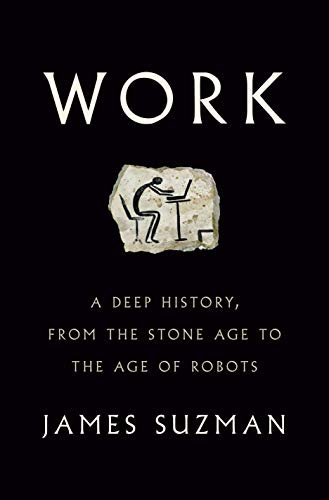
★★★★☆ Work: A Deep History, from the Stone Age to the Age of Robots
If you enjoyed Debt: The First 5,000 years, you’ll like this. Suzman doesn’t fall prey the lazy historical thinking about work as a specific creation of industrialization. He instead digs deeper into human history to try and pinpoint when exactly the concept of work (as distinct, say, from “surviving” or “existing”) emerged, what it meant for people then, and what it means to us today. The book is more philosophical than I expected, but it’s better for it.
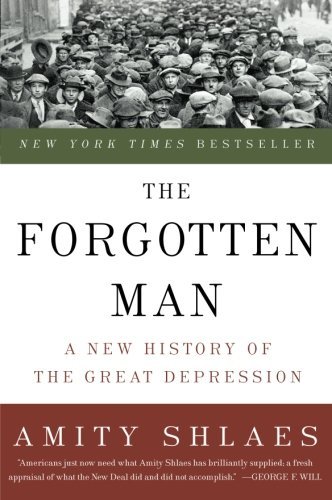
★★★★☆ The Forgotten Man
I deeply enjoy reading books that update my worldview in some material way. It’s well and good to collect trivia and it’s great to read for no other reason than you like a story, but I get the biggest thrills out of reading a convincing and well-researched argument that my existing worldview is incorrect in some way, and then accepting or rejecting the argument on the merits of the facts. This is one such book. If you think you know about the depression in America, Shlaes has a different take and he does an excellent job of both telling compelling stories about real humans and diving deep into the details that support his broader arguments.

★★★★☆ In Your Defense
This one didn’t upend any of my pre-existing understandings of the world, but it was a page-turner and the stories that Langford tells are equally empathetic and factual. You feel for all of her protagonists (even the bad guys). Books like this make us all better humans by telling the stories of our fellow man in a factual, but tender way.

★★★★☆ Factfulness: Ten Reasons We're Wrong About the World - and Why Things Are Better Than You Think
This one falls prey to the nonfiction divide. It’s engaging stuff and I actually updated a bunch of world views, which was fascinating, but the end just rings hollow. Even the title seems out of step with our times. In a world killing itself with worry about fake news, it’s darkly humorous to think about any one person knowing the “important facts” of the world. As we’ve all seen recently, too many people have followed Rosling’s advice, done their own research, and ended up with far more distorted views of the world than he might have ever thought possible.

★★★☆☆ Nurture Shock: New Thinking About Children
This must have been really revolutionary to read when it was published, but time hasn’t been kind to all of Merryman and Bronson’s findings. Things like growth mindset have failed to reproduce in subsequent studies, for instance. But on the whole, it’s a good read and like many pop-sci books, it’s an easy read. I am personally really looking forward to reading Emily Oster’s new book (The Family Firm) for my next dose of data-driven parenting advice.

★★★☆☆ The Verge: Reformation, Renaissance, and Forty Years That Shook the World
Although I think some of Wyman’s arguments about the impact of this particular time period are a bit exaggerated, this is still an engaging read. I took away a profound sense of just how complicated, modern, and advanced the world of the late 15th and early 16th centuries were. In the midst of reading this book, it’s easy to forget that you’re reading about an event that occurred in 500 years ago because the characters and events are retold with such clarity and humanity.

★★★☆☆ The Sirens of Mars: Searching for Life on Another World
I was really hoping that Sarah Johnson would rock my world in the same way as Kevin Hand did in Alien Oceans. Alas, this was interesting, but not revolutionary. If you don’t know much about the history of Mars exploration, you’ll learn a bunch, but for anyone that’s interesting in space exploration and has read a couple of recent books on the topic, there isn’t a lot that’s new here.

★★★☆☆ Bargaining for Advantage: Negotiating Strategies for Reasonable People
Pretty good, although it falls into the “business book” trap of telling lots of “just so” stories that feel a bit like humble-brags by the author. I also couldn’t escape the feeling that the main points could have been more concisely encapsulated in a shorter blog post. But such is the nonfiction genre, I suppose.

★★★☆☆ The Undocumented Americans
I really enjoyed this, but I didn’t learn anything profoundly different or life-altering. It’s important and healthy to spend time in other people’s shoes, though, and Villavicencio does a great job of telling the stories of real people.
Moving from SF to Austin: The Good, the Bad, and the Ugly

A little over a year ago, my family moved from San Carlos, CA to Austin, TX. There are real costs to relocating to Texas from California, but it has been a very positive change for us. If you are considering making the transition, I hope you will find this post useful.
A Little Background About Us
Here are a couple important things to know about my family and I before reading further:
My wife and I weren’t raised in major coastal US cities. This is really important to understanding what we consider “normal.” I grew up in a town of 7,000 people in rural Ohio. My wife grew up in Tampa, Florida. We are far more culturally and politically centrist than lots of folks raised in New York, San Francisco, or Seattle.
We have kids. We have two young kids with another on the way. Our kids will be 0, 3 and 4 years old next year. We are deep in the trenches of early parenthood.
We didn’t have any family in California. Our nearest family was a cousin in Seattle. After that, all of our family was either in Ohio, Texas, New York, or Florida, with the greatest concentration in the Austin/San Antonio area.
My wife wanted to be a stay at home mom. While we were in the Bay Area, she worked as a support team lead and software engineer, but she gradually lost interest in working a traditional tech job. By the time we left San Carlos, she was really looking forward to taking some time away from the corporate world to focus on family.
We love hot weather. My wife thinks that “warm” weather starts at around 85°. Winter has always been my least favorite season. For us, the Bay Area was always uncomfortably cold.
We aren’t living in central Austin. Our family is split between north Austin and a community out near Lake Travis. People I know who grew up here tell us we aren’t really living in Austin, but then again, we weren’t really living in SF either. Downtown Austin does have a different vibe than the ‘burbs.
With all that in mind, here’s a summary of the good, the bad, and the ugly of moving to Austin, Texas from the Bay Area.
The Good
Austin is a Lot More Family-Friendly
You see this in lots of little things about the texture of life here: it’s much easier to get into daycare, there’s more space for kids to run around, there are a lot more families with kids, and most social events are default kid-friendly. Here are some anecdotes we’ve experienced in the last year:
Easier daycare. When we arrived in October 2020, it was still the height of the covid-19 pandemic, and so we hired a nanny to watch our kids so that we could reduce covid exposure. We were able to find 3 suitable candidates in half the time and at 50% the cost of comparative candidates we interviewed in the Bay Area. When we realized that it was going to be really important to put our kids in daycare for our son’s speech development, we toured 3 places in 2 weeks and started one week after applying. For comparison, it took us 6 and 8 months to land spots at the two daycares we used in the San Carlos area.
More space. The yard at our current rental home is 4x larger than the one we had in San Carlos. We’ve never spent more than a few minutes finding parking at grocery stores, playgrounds, museums, or events for the kids. Except at rush hour, the roads are often empty. The highways are grandiose. I see fields and undeveloped land every time I leave my home. Texas is big, and for anyone that has kids with lots of energy, it’s great.
Default kid-friendly. In the Bay, we attended a wedding for some friends who specifically requested that we not bring our then 6-month-old kid. Friends of ours who are getting married in SF this February have made a big deal of the fact that they are okay with us bringing our kids (we love you guys!). Company events at both mine and my wife’s work places in the Bay didn’t explicitly bar young kids, but most people with kids chose not to bring them. While we haven’t been out to many places in Austin yet, the couple of food trucks and restaurants we’ve been to have been bigger and have had more kid accommodations. Our favorite place to go recently is a burger place with an attached outdoor playground. As things open up, I’m seeing more, better, and cheaper opportunities to be out of our home with our kids.
There are More Lifestyle Opportunities
Because it is cheaper to live in Austin than the Bay Area, people can afford to make alternative lifestyle choices without compromising their ability to make ends meet. Good friends of ours in the Bay had a rule that anyone that chose to live in the Bay Area could choose two: retire, own a house, or have kids. But that rule still assumed that both parents work lucrative jobs in the tech industry. If one or both parents wanted to do something else -- be a full time artist or take time off work to care for a sick relative, for instance -- then you probably couldn’t afford any of them.
That means that Austin is socially more diverse than the Bay. Here are some examples from our social group:
Friends of ours who also moved to the Austin area last year quit their jobs and are working for themselves on two new companies.
A friend of mine who moved to Austin about 18 months ago quit his job at a major tech company and took a pay cut to go work for a company he found more intellectually interesting.
My wife’s cousin decided to stop working on a business that she started so that she could focus on being a full time stay at home mom.
This point isn’t unique to Austin. Austin is still quite expensive in absolute terms, so if you truly want to live in a low cost of living town, this isn’t it. With that said, I think people coming from the Bay Area will find Austin to be markedly cheaper.
The Environment is Clean
We didn’t spend much time in downtown San Francisco, which is next-level gross, but even in a nice suburban neighborhood on the peninsula, the Bay Area is still gritty. I saw homeless encampments every time I went to get groceries. There was frequently garbage overflowing from the bins at the local playground. And although it’s much less visible, the Silicon Valley suburbs are home to more than 23 toxic superfund sites [source].
The Austin suburbs, by contrast, feel quite clean. This cleanliness manifests in lots of little ways: highway overpasses aren’t visibly stained by smog, there’s less trash on the side of the roads, and public outdoor spaces don’t have urine stains. While I was writing this, I thought that maybe this was due to population density, but as a friend pointed out, that doesn’t seem like a viable explanation. Honestly, I don’t know exactly why it’s cleaner here, but it is.
There’s More Political Diversity
In 2016, the day after the presidential election, I went into work in San Francisco and was chatting with a coworker. He thought that if we were ever going to heal our increasingly polarized political landscape, both the left and right would need to interact with and humanize one another. I said “I spent 18 years of my life interacting with people on the other side of the political spectrum while growing up in Ohio. That was enough.” I’m embarrassed about that now. I’ve got kids, and if their world has any shot of being as peaceful as the one I grew up in, I think my coworker was right: we need to start humanizing people on the “other” side. You can enjoy, appreciate, and respect others regardless of their beliefs provided they aren’t actively persecuting others. This is, of course, a very slippery slope these days and tolerance has been rapidly receding from public discourse. Is it okay to punch Nazis?
Since we’ve moved to Austin, we’ve encountered far more centrists and conservatives than we did in the Bay. Upon learning that I worked at Facebook (now Meta), a neighbor asked me if I was responsible for censoring Trump. Another neighbor that stopped by to welcome us to the neighborhood started a conversation by asking us who we voted for in the presidential election. We didn’t feel comfortable answering, which made things awkward. At the nearby elementary school playground, I chatted with a mom wearing a MAGA hat.
Did these interactions make me feel less safe? Yes. But if, as a straight white male, I’m unwilling to feel that discomfort, then things are much worse than anyone is willing to admit. And the reality is that despite my discomfort, nothing bad has happened. I’ve met people I disagree with, but nobody has threatened me or my family and with the exception of one person, nobody has even prolonged or intentionally pursued an uncomfortable conversation. I would like to think that by being a reasonable human in these encounters, I’ve given some of the people I’ve met across the political divide a reason to pause when they stereotype godless libtards. Maybe not, but I can honestly say that I’ve tried, which isn’t something I had an opportunity to do in the Bay.
If you’ve ever felt powerless to help heal the national political divide, here’s something concrete and achievable: engage someone with a different set of values than you and attempt to be compassionate. It’s a tall order, I know. As someone who has rarely been the target of hate, it’s easier for me to advocate for this, but I don’t see a peaceful way out of our current situation without some bold changes and similarly courageous people to enact them. I’m not advocating that you befriend or support people you find loathsome, I’m suggesting you find ways to engage, demonstrate humility, and find the humans behind the labels.
Remote Work Makes Austin More Competitive
Before covid pushed so many knowledge workers to be remote, Austin had a lot less tech opportunities than is commonly believed. Austin is not a major tech hub, but a growing acceptance of remote work is dramatically improving the picture.
When I moved here last year, I did a simple test to gauge the size of the tech job market. I went to LinkedIn and searched for my job title “product manager” in both the Austin and SF Bay Area metro areas and compared the number of search results. Austin had approximately 82% fewer jobs in October, 2020. I just conducted the same test and there has been a massive shift: Austin now has only 57% fewer job postings [11,394 vs 26,361]. That’s a huge shift in the market for my skill set here in Texas. I attribute this mainly to remote work becoming more acceptable, which has changed Austin’s prospects in direct and indirect ways:
Direct changes. I have been able to remain employed by a Bay Area company as a fully remote employee. That wouldn’t have been possible as little as 24 months ago. Many major technology companies are now hiring non-trivial numbers of people to be fully remote employees in disciplines that were previously only available at company headquarters.
Indirect changes. As companies relax the rules around which roles can be hired where, companies that already have staff in more than 1 city may start building branch campuses in secondary and tertiary markets. Metros that are most likely to benefit from this effect are the ones in smaller metros that are seen as receptive to tech investments, but are not yet mature. Austin fits this bill perfectly.
I predict that trend will subside a bit as colocation picks up again next year, but I think that remote work will remain far more common in the coming years than it was pre-covid.
The Bad
Housing is Still Really Expensive
If you are squeezed into a tiny 900 sqft SOMA San Francisco apartment, paying $4,500/mo for the privilege of sharing your washer and dryer with 8 other tenants on your floor, then Austin will feel cheap. But if you live in any of the suburbs/exurbs in the Bay, Austin real estate might not be appreciably cheaper in absolute terms. Here’s why:
Recent surge in home values. Austin real estate has appreciated by more than 55% in the last 2 years [source]. The market is probably overpriced [source, source], but while the market is softening a bit, home prices are still up 28% just from last year [source, source, source]. When we purchased our home in April this year, we had to pay 30% over asking and waive financial contingencies. And we felt lucky: the same day we made our offer, a home nearby on a smaller lot sold for 55% over asking in an all-cash purchase before the first open house occurred. Even if a price correction does occur, it would have to be enormous to erase all of the recent price increases.
Texas homes are physically larger. The last place we were renting in the Bay was a 1,500 sqft 3 bedroom, 2 bathroom home. If Zillow is to be trusted, it is currently worth $2.5M. We paid $1M for our 2,300 sqft 3 bedroom, 2 bathroom home in north Austin. The two homes are not directly comparable for a bunch of reasons, but if you ignore all the details, we still paid ~$430/sq ft compared to $1,666/sq ft in the Bay. Our Austin home is 3.9x cheaper per square foot, but it’s only 60% cheaper in absolute terms. Why is that? It’s 800 square feet larger. Most homes built in Texas are newer and larger.
Property taxes. If we had purchased a home in San Carlos, the yearly property taxes would have amounted to around 1.1%. In Austin, it’s 2%. So our tax bill for our new home will actually be about 80% of what the tax bill is for the home we were renting in San Carlos. Homes in Travis county are much more expensive to hold onto.
Property upkeep. This is a bit of an obvious one, but when you’re crammed into your tiny home in Millbrae, it’s tempting to go Zillow gazing at Texas mcmansions, but maintaining a mcmansion is costly. We are in the phase of life where we try to hire out property maintenance because we just have so much else to do. Here in Austin, it costs $100/mo for lawn care, $250/mo for pool care, and $500/mo for bi-weekly house cleaning, and $2-300/mo for electric (AC) for 6-8 months out of the year. We keep our thermostat pretty high (72 degrees), we have a small pool, and our lawn is pretty big. It’s more expensive to maintain a larger house.
Austin is still a lot cheaper than the Bay Area, but that’s not saying much. Living in the NYC metro is 30% cheaper than SF [source]. If you want truly affordable housing in America today, you have to look at relatively undesirable metros and rural parts of the country. You can still find nice 4 bedroom homes in my rural Ohio town for less than $200k. Now that’s what I would call affordable.
Californication
When we were living in California, we were frequently frustrated by labor shortages, absurdly burdensome bureaucracies, crumbling infrastructure, and terrible traffic. The situation in Austin isn’t a ton better:
Hard to find affordable help. In the Bay, we paid our house cleaner and nanny $35/hr and felt really lucky to be working with both of them. We are currently renovating the home we bought here. To do it, we interviewed 12 contractors. Only 3 were taking new work -- our six-figure job was too small. Of those, 1 flaked out and didn’t give us an estimate at all. The company we went with told us that even ignoring elevated material costs due to Covid supply chain issues, shortages in experienced labor would extend the project and jack up the price substantially.
Absurd bureaucracies. If you’ve ever tried to refute a Clipper charge, refill a Fastpass card, or prepare the documents to rent a property, you know how bureaucratic and difficult it can be to live in the Bay Area. Here in Austin, we filed our building permits with the City of Austin 2 months ago and still haven’t heard back. The permit to build our new pool took 2 months and then got rejected because the surveyor mis-measured the location of a tree. We re-submitted that permit and it hasn’t come back yet. If that wasn’t bad enough, our neighborhood HOA is a required signatory on all our permits and has their own review and approval process.
Crumbling infrastructure. We used to joke that driving on 101 was an obstacle course video game because of all the potholes and were looking forward to at least driving on level road surfaces in Texas. But all of the roads in our neighborhood and the main artery to the highway have been under construction since we moved and are still a work in progress. Currently, we are driving on gravel roads. We haven’t received any notice about when the work will be complete and what it entails.
Terrible traffic. Very few US cities can compete with the Bay Area for traffic. It used to regularly take me 45 minutes to drive 6 miles on 101 to get home in the evening. While Austin traffic is better in relative terms, it’s still pretty congested. Getting into downtown from north Austin without traffic takes about 20 minutes. During rush hour, it can be closer to an hour.
In many ways, Austin feels more like California than I had expected. From the red tape and restrictive zoning to the interminable road projects, Californians shouldn’t worry too much about missing home if you move here.
The Weather
For my family, the weather is actually a plus, but I realize that for most people, really hot summers aren’t desirable. This last summer was pretty cool by Texas standards, but the high temps were still ~100° for a solid 6 weeks in August. It can be absolutely brutal to be out during the day for months at a time. And unlike coastal cities, it doesn’t cool down in the evenings. If it’s 100° during the day, it’s frequently 75-80° at night.
I realize this is the section for bad stuff, but I do want to point out why really hot days aren’t as bad as they sound. In the Bay, the best part of the day occurs between 11AM-4PM. That’s when it’s sunny, relatively warm, and typically cloudless. On a summer day on the peninsula, it can get into the 80s during the day, which is beautiful weather to eat outside or take a walk. But early in the morning and in the evenings -- the times when most people are outside getting to and from work or socializing with friends -- it stays quite chilly and is often windy. If you are in SF, those times of day are also foggy.
In Austin during the hot part of the year, the best times of day are the early mornings and late evenings. So if you work a normal 9-5, I still think Austin weather is preferable. You can exercise at a nice 68° degrees in the morning, come home and sit outside while eating dinner, and then have a cold beverage on the porch at 9PM all while wearing shorts.
I get it, I get it, nobody shares this preference, so I’ll move on.
The Ugly
State Politics
When people ask what I think of living in Texas, I often like to be a bit sarcastic and insist I didn’t move to Texas, I moved to the people’s republic of Austin. But of course, Austin is in Texas, and the Texas state government does lots of stuff that I disagree with.
To take a very concrete example, my wife and I are pregnant with our third child right now. Texas’ recent abortion ban is fairly troubling for us. We are both over the age of 35 and so the risk of genetic disorders and general problems with labor and child development are very real. Luckily, we haven’t had to face any of those challenges, but it was something we had to discuss.
At the state level, it can be frustrating to be a left-leaning centrist in Texas. We are somewhat inured to this, however. We’ve lived in Ohio, Florida, North Carolina, and California and only California did stuff that didn’t make us cringe on a regular basis.
Climate Change
The US is going to get hotter in the next 50 years. And Texas is already really hot. After you exceed a wet bulb temperature (a combination of air temperature and humidity) of 95 degrees, the human body is no longer able to cool itself. [source] Depending on the humidity, this could be an air temperature anywhere between 103-111 degrees fahrenheit. In the summers here, the average high temperatures are in the high 90s [source]. So for 3 months out of the year, unseasonably hot days could pose a threat to our health if for some reason the AC is not working.
While climate change maps haven’t really settled on what will happen to the state’s water supply, it seems likely that increasing drought and water scarcity will also be a problem for Austin residents in the coming decades.
Compared to California, however, I think there are fewer climate and environmental risks. California has been suffering increasingly long and deep droughts for the last 30 years [source], a major earthquake is likely to occur along either the San Andreas or Hayward faults in the next 30 years [source], sea level rise could inundate low-lying areas of the Bay in the next 30 years [source], increasingly severe storms are likely to increase the risk of flooding [source], and wildfire season is expected to become more severe [source].
I’ll take the heat and water risks in Texas over the climate pressures in California, but Texas will definitely be uncomfortably hot around mid-century.
Summary
I left out some of the really great stuff that is specific to my family because, well, you aren’t us. We are living a 10 minute walk to my in-laws’ house. We get along with them really well and they are helping us with childcare on a regular basis. Our extended family is only a 90 minute drive away so the kids can see their cousins more frequently and we get to socialize with my wife’s cousins who are all awesome humans. My parents are planning to move down here in a couple years and might actually be able to purchase a home.
Our living space is physically much nicer. Apart from just being newer and better constructed, we can afford to have separate bedrooms for each of the kids (a life saver for sleep quality), there’s more yard to play in, the kids love the pool, my wife loves having a nice big kitchen, and I love having a dedicated office.
On the lifestyle front, we can afford to have my wife out of the workforce to focus on the kids. This has in turn enabled me to specialize a bit more on my work, which is enjoyable for me. The lower cost of living has also made it possible for me to at least consider taking less lucrative roles in the next couple of years, whereas it was previously not an option.
So for us, it’s been an overwhelmingly positive change. It’s telling that when we discuss the things that we miss the most about our time living in California, we wax poetic about some of the awesome friends that we miss and the one sushi place in downtown San Carlos, but then we fall quiet as we struggle to find anything else that we really miss on a daily basis.
#Thanks to Nick, Ben, Becca, and Sherri for reading over drafts of this post and helping me improve it!
Why I’m Not an Angel Investor

Last year, I became interested in angel investing as a potential hobby and business opportunity. It seemed like a pretty good fit for my professional experience: I’ve founded 2 profitable companies, raised venture funding, went through YC in W14, and have subsequently worked at Salesforce and Facebook. I’m not an expert in most things, but I have become an expert in building and shipping new technology products.
However, after reading 5 books and 24 articles on the subject, I have decided angel investing is not for me. I like building stuff, not talking to other people about building stuff. But that doesn’t mean it’s not for you! If you’ve ever wondered about the asset class and are considering making investments, but don’t have time to read 1,000+ pages on the topic, read on to get my take.
What Must Be True to Be a Successful Angel Investor?
If you meet the following 3 criteria, then I think angel investing can be an excellent way to have fun and generate a meaningful return on investment:
You intrinsically enjoy investing in companies. This means that absent any financial return, you’d want to do the work to invest in companies anyways. What sort of work am I referring to? Mostly taking meetings with entrepreneurs, reading about business models, and networking with other domain experts. Does that sound fun? If so, angel investing could be a really fun way to meet interesting people and make a few bucks along the way.
You have at least 10 hours/week for 3-4 years to do the work. All the authors I read advocate a portfolio approach to angel investing. This makes sense: even the smartest investors are only right a fraction of the time, so you need a bunch of bets to ensure you get enough winners to cover the losers. All of the available literature shows a positive correlation between return on investment and time spent conducting due diligence. Factoring in different assumptions about conversion rates (first meetings -> investments), I think you should budget at least 10 hrs/week spread over several years to build a suitably diversified portfolio. You can build your portfolio much faster, of course, this is just the lowest bound on time commitment that seems likely to result in market returns.
You have at least $3.3M in liquid assets in your portfolio. Angel investing is risky. Even if the average internal rate of return is ~20% (see the sources below), there is a very real possibility that the return on your specific portfolio will be negative. To be safe, then, you shouldn’t have much of your total portfolio allocated to angel investing. At the same time, if you have too few absolute dollars invested, even a 20% IRR becomes too small to make it worth your time. $3.3M seems to be the lower end of portfolio size required to have enough cash to create a diversified portfolio and have a shot at generating meaningful returns.
There are lots of other factors to consider when deciding whether or not to make angel investments: deal flow, connections, and industry knowledge to name just a few, but I think that as long as you meet all of the criteria above, you can reasonably expect angel investing to be both enjoyable and lucrative. In the following sections, I go deeper into each of the criteria above to explain how I came up with the guidelines so that you can evaluate my logic and make adjustments to my calculations based upon your own personal circumstances.
You Intrinsically Enjoy Investing in Companies
If you just really like investing in companies, that’s a big first step to becoming a successful angel investor. As I outline in further detail below, building a profitable portfolio takes a lot of time, focus, and attention. If you don’t enjoy the work, you’ll struggle to follow through and will likely not achieve the returns advertised by other prominent angels. The best way to know if you intrinsically enjoy investing in companies is to already be doing it. If you have already made an investment in a private company or if you spend considerable time investing in public companies, that’s a very strong signal that you would enjoy being an angel investor.
For people who aren’t already angel investing or actively managing a stock portfolio, it’s necessary to do a bit more introspection to determine whether you would enjoy angel investing. Here are some typical angel investor activities. I would recommend reading through the list and taking note of your immediate, instinctual reaction to each one. Do you feel excited to do the work? Do you recoil at the prospect of doing these activities? Does reading this list make you bored? Pay close attention to your gut reactions:
Reading launch announcements for new technology companies.
Reading fundraising announcements from companies.
Creating a big spreadsheet to analyze a company’s business model.
Networking digitally and in-person to meet entrepreneurs.
Attending incubator demo days and expositions to meet entrepreneurs.
Networking your way to industry experts to fact-check founder pitches.
Responding to founder inquiries for help with current business challenges.
Recruiting people from your network to fill current openings at your portfolio companies.
Discussing legal documents with your lawyer to make an investment.
Trying new technology products to understand them and their competitive landscape.
Finding and interviewing the customers of companies you may invest in.
If you are either already investing and enjoying it or you read through this list of activities and it sounds like a lot of fun, you probably have an intrinsic interest in investing and could make a really good angel investor.
If you are like me and think these activities sound kinda boring, you can probably stop reading now. Angel investing is neither a passive activity nor something you can outsource. There are other ways to passively invest your money that don’t require any of the above work and still make reasonable returns (index funds can reasonably return 6% per year with no effort, real estate crowdfunding sites like Fundrise are a bit more active, but return 10%+). You should look into those instead.
You Have At Least 10 Hours Per Week to Do the Work
Angel investing is a lot more time consuming than it may appear. Because most of the returns in a portfolio are earned by the top 5-10% of deals, you must spread your risk over a large number of companies to realize anything close to 20% IRR over the long term.
Finding and investing in a large number of companies, however, takes time. How much time? Let’s do some quick estimates to get a ballpark:

Since the average and median for this dataset are the same, let’s use 20 as the minimum size of a functional portfolio.
Time Required for Sourcing and Due Diligence
So now we know how many companies we need to invest in to achieve industry norms for return on investment. But how long does it take to find and close a deal? The data here is sparse and a bit disjointed, but let’s review what’s available.
In his book, Angel, Jason Calacanis writes that he can typically perform the necessary sourcing and due diligence for a deal in about 3 hours.
By contrast, in one of the most famous oft-quoted studies in the industry, Robert Wiltbank of Willamette University reports that when operating in groups, angel investor returns are significantly better when the groups devote more time to due diligence [source]. He cites 20-40 hours as the threshold for realizing better returns.
Taken together, what we know from available literature is that the amount of time required to perform due diligence on a company ranges from 3-40 hours, but seems more likely to be in the 10-30 hour range. If we take the average, we get 20 hours of time required to perform due diligence on deals that you close.
This makes intuitive sense. It takes time to find a company, arrange to speak with the CEO, research their pitch, speak with industry experts to learn more about areas you may not have domain expertise in, examine any documents or financials, model expectations around valuation and dilution, negotiate valuable (if you can), make a decision, and communicate it to the team.
But of course you aren’t going to invest in every company you research. In fact, you’re likely to invest in only a tiny fraction of the deals you hear about. There is no available data for how long it takes an average or even highly skilled angel investor to disqualify deals, but it’s safe to say it’s much less than the time spent getting all the way to an offer for the deals they do close.
Because there isn’t any available data to use, I propose using a fairly simple rule of thumb that it takes about 5 hours on average to vet a deal. This allows us to incorporate a few very long due diligence processes where you spend more than 20 hours learning about a company only to not invest/not be able to get into the round as well as a large number of very shit deals that you are able to quickly reject.
What % of Deals Should You Expect to Close?
Ultimately, this boils down to your personal decision making. You could choose to invest in every company that pitches you. You could choose to only invest in companies that have already achieved product/market fit, are scaling, and have taken money from Andreessen Horowitz. In the former case, you would expect to achieve far less than 20% returns (most companies fail) and in the latter case, you would expect to never actually have your money accepted because you will be a new angel investor with no reputation fighting to get into deals that already have very little risk and seasoned investors.
In my reading, I only came across two authors that disclosed their conversion rates. Jason Calacanis invests in 4% of deals he identifies, and David Rose invests in 2.5%. I think it’s probably safe to use the higher number, especially when you are starting out and deal flow will be a challenge.
Time Required to Build a Portfolio
Let’s say you invest in 1 company every year for 20 years. By the end, you will have invested in the requisite 20 companies, but you are very unlikely to achieve anywhere close to 20% returns. Why? Your portfolio performs better the larger it is for a sustained period of time. If you only invest in 1 company/year, the size of your portfolio as measured at any point during the 20 year period is likely to be quite small. This creates two problems:
Timing effects. If you have allocated $500k for angel investments, but you happen to pick poorly on your 5-10 tries (which should be expected), you might not have enough capital left to do follow-on investments or invest in new opportunities. Both of these will limit your returns.
Lack of social/human capital. When building dealflow, it helps to have experienced success. If you invest very slowly, you will have less access to high quality deals for a larger portion of your portfolio building years.
All of the authors I read accept the industry norm of building your portfolio (20 companies) over the course of 1-5 years. Calacanis is on the extreme short end (recommending would-be angels to quickly get to scale in year 1) with Rose being on the opposite extreme, suggesting that new investors shoot to make 20 investments in 5 years. I think Rose is more realistic and will suggest 4 years as a compromise.
Putting it All Together
We now have all the necessary variables to calculate the total amount of time you can expect to spend building a suitably diversified angel portfolio. To review:

We can figure out how many hours/week it will take you to build a minimum viable angel portfolio with the following equation:
((Time Required for Due Diligence / Deal Conversion Rate) x Necessary Portfolio Size) / Time to build Portfolio in Weeks
Plugging in values, we get:
((5 hrs / .04) x 20) / (4*52)
(125 x 20) / 208
2500 / 208
12 hours/week
First, I want to point out, that’s a lot of time required to build your portfolio! 2,500 hours is a little more than a year’s worth of full time work in the US. The proposal here is to spread about 1.25 years worth of full time work spread over 4 years to get the portfolio up and running.
This suggests 12 hours/week average, so let's say a minimum of 10 hours/week for our guideline.
But Don’t Take My Word For It
The reason I wanted to go into such detail in this section is to provide you with the underlying research and variables I used in coming to my conclusion. You may, however, have different data sets that lead you to use different underlying variables and therefore alter the resulting time required. If your day job is already investing, for instance, you may have the skills necessary to evaluate companies much faster. Feel free to adapt the formula above to your life circumstances and arrive at your own conclusions for how long it will take to build your portfolio per week.
Tweak the Formula with My Calculator
You Have At Least $3.3M in Liquid Assets in Your Portfolio
Investing in startups is risky. Here’s how most venture capitalists expect a portfolio of 10 companies to work out after 10 years (this data is an amalgam from the books I read):
5 companies die and return 0x
2 return the investment and no more, for a return of 1x
2 return 3x
1 returns 22x
Internal rate of return is tricky to calculate, and I’ve made some assumptions about the timing effect of these returns in the linked spreadsheet, but this roughly lines up with the 20% IRR that the authors I read suggest is average for the asset class.
The important thing to understand here is that diversification is the key to hitting the 20% IRR target. If you invested in 10 companies as described above, but miss the one that returns 22x and another that returns 3x, your return will be a paltry 8% IRR - you would have been better off just parking your money in Vanguard and calling it day. Some angel investors lose 100% of their principal. It’s just a cost of doing business.
Apart from building a portfolio of companies, how else do angel investors protect themselves from the volatility of the asset class? They only invest a small portion of their overall portfolio.
How Much of Your Portfolio Should You Invest?

Everyone will have a different risk threshold, but the consensus among authors I read seems to be 10%. They differ, however, in how they define a portfolio. On the extreme end, Jason Calacanis recommends up to 20% of your entire portfolio (including illiquid asset classes like real estate and 401ks) whereas John Huston, the founder of Ohio Tech Angels, recommends no more than 10% of your family’s cash flow, in other words, the money you set aside for savings on a yearly basis.
I prefer to take a compromise between those two extremes and suggest that would-be angel investors allocate no more than 15% of their liquid invested assets in startups. What do I mean by “liquid assets?” I mean cash, stocks, and bonds that are not held in a retirement vehicle like a 401k, Roth IRA, or in an asset class that penalizes early withdrawal (CDs for instance).
To take a concrete example, let’s say your total net worth is $5M, but $500,000 is locked up in home equity, $300,000 is tied up in investment properties, and another $200,000 is in your 401k. I would say you have a liquid portfolio of $5,000,000 - $500,000 - $300,000 - $200,000 = $4M.
Why exclude all those otherwise normal assets? Because they are costly to access and those costs can dramatically erode your upside potential. Many 401k plans, for instance, require the owners to take a 10% penalty if funds are withdrawn early. That means that to make a 20% IRR return on capital withdrawn early from a 401k, you would need to earn substantially more to adjust for the early withdrawal penalty. Although such returns are possible, they are unusual for the asset class.
How Much Should You Invest in Each Company?
The only step remaining to calculate a minimum viable liquid portfolio size is to determine how much you want to invest in each company.
This isn’t as straight-forward as it sounds, however. You will need to calculate not just how much you want to invest, but also how much you want to hold in reserve for follow on rounds. Some investors only do seed round investments and don’t participate in follow-on rounds, but the literature suggests that doing so substantially limits portfolio returns since you aren’t able to double-down on the successes.
According to several surveys by the Angel Capital Association and Angel Resources Institute, the average investment per angel per company is $25k, which includes participation in follow-on rounds. This suggests that initial investments made by most angels fall in the $15-20k range.
Venture funds and Lord and Mirabile recommend holding at 100% of the initially invested capital in reserve for every investment. Putting this together, let’s say you go with a $15k initial investment and hold $15k in reserve in case the company does well. That means you need $30k per investment. And we know from the first section that you should be trying to build a portfolio of at least 20 companies. $30,000 x 20 = $600,000. This is probably a bit high of course, because most companies (~50%) die outright, and of the remaining companies, only a fraction will have appealing deal terms or space on their cap table. It’s not precise, but I round down by $100,000 to take into account the large number of companies that don’t need follow-on funds.
This leaves us with a lower bound of $500,000 required to build a minimum viable angel portfolio. Using the guidance that you should only invest ~15% of your portfolio in startups, that implies a minimum liquid portfolio size of $3,300,000.
What is Your Time Worth?
Another way to think about the minimum size of your liquid portfolio is to calculate the expected hourly wage. Savvy investors will have a good sense what their time is worth per hour.
This part gets a little complicated because internal rate of return isn’t super easy to calculate. It involves the present value of cash, inflation, and uneven returns over time. Luckily for you, I’ve done the math in my calculator!
My findings suggest that most investors that follow my guidance above will earn a healthy $720/hr for their time, which is probably a fairly good rate of return for most people in this wealth and income class. You can tweak the calculator below:
Tweak the Formula with My Calculator
But What About Prestige and Connections?
Based upon my research above, I think that if you like investing in companies, have at least 10 hours/week, and have a liquid portfolio of at least $3.3M, angel investing can be fun and lucrative.
Before I wrap up, however, I wanted to take a moment to call attention to the elephant in the room: not all angel investors are in it to make a buck. Some are altruistic, preferring to give money to companies as a way to support people like themselves or to further advancements in a particular area of research and development. Other angels are drawn to the prestige of networking with the rich and powerful.
Having done my research, I have to conclude that neither reason is bad, provided you relax the assumption that you will earn market returns on your investments. For the person who just wants to look good at parties (no judgement here, being an early investor in successful, innovative companies is pretty fascinating), it doesn’t matter whether you earn 20% IRR on your invested capital, it just matters that you get what you came for.
So, if you have read this far and say “you know what, I actually just want to help out entrepreneurs because I relate with their struggles, and it’s not a financial problem for me to do it” then who cares about any of the above? Go and invest in some companies.
Similarly, if you do a little introspection and decide that your primary motivation is to meet interesting people or have a shot at witnessing the meteoric rise of a cool new technology, who cares what your rate of return ends up being? You, too, can disregard my advice.
Finally -- and I saved this to last because it’s such an extreme edge case -- if you are already rich or famous, it seems likely that none of this blog post applies to you. If you are Tim Ferriss, for instance, you won’t have to work to generate deal flow, it will come to you. And through your network of highly knowledgeable friends and acquaintances, you can more easily vet deals, check out business model assumptions, and get intros where needed.
Conclusion
The picture that I’ve painted above about a successful angel investor may not sound super appealing to a lot of people. In practice, starting out as an angel, even one with great connections in a major tech hub like Silicon Valley or New York, is a humbling experience. You won’t get access to the best deals, you’ll try to give companies your money and get rejected, you’ll have to negotiate against absurd valuations, and if you’re lucky, you’ll earn 20% IRR for your efforts. If you have a liquid portfolio of $3.3M, that amounts to a healthy $720/hr, but it’s certainly not free or passive income.
As I mentioned in the opening paragraph, I failed the “intrinsic motivation” part of the equation, so I never even got to the point where I was comparing my desired vs realized hourly wage. But for anyone interested, it’s a sobering realization that even experienced angel investors are only a few mistakes away from earning less than a passive index funds.
#Thanks a ton to Nick Winter, Steve Saines, and Eric Xiao for suggestions and edits.
Sources
Articles
After 20 years: Updating the Berkus Method of valuation - Dave Berkus
How I Invest - Mark Suster
How to Become an Angel Investor - Upstate Business Journal, 2016
Guide, Don’t Control - FeldThoughts
Staging Capital: Angel Follow-on Theory - Christopher Mirabile (Seraph blog)
Approximations, Assumptions and Aspirations: Methods For Valuing Startups [Part I] - Christopher Mirabile (Seraph blog)
Approximations, Assumptions and Aspirations: Methods For Valuing Startups [Part II] -
Christopher Mirabile (Seraph blog)
Startups Are Risk Bundles - Coding VC
For a fraction of the price, angel investors can pay huge dividends - The Globe and Mail
New Data on Angel Investor and Angel Fund Returns - AngelBlog
Stop the Merry-Go-Round, I Want to Get Off: An Introduction to Angels and Exits - Seraph Blog
Angel Investors Do Make Money, Data Shows 2.5x Returns Overall - TechCrunch
In-Depth Angel Investor Survey Sheds Light On Angel Success - Forbes
Prediction and control under uncertainty: Outcomes in angel investing - Robert Wiltbank
How to join an Angel Investor Group - Investopedia
Top 3 ways to Getting started with Angel investing in less than 30 minutes
The Mechanics of AngelList Syndicates - Hackernoon
An angel investor's ultimate guide to AngelList Syndicates - VentureBeat
My Angel Investor Checklist - TechCrunch
How To Invest In Startups - Sam Altman
How to be An Angel Investor - Paul Graham
Books
Angel: How to Invest in Technology Startups--Timeless Advice from an Angel Investor by Jason Calacanis (288 pages)
Angel Investing: The Gust Guide to Making Money and Having Fun Investing in Startups by David Rose (304 pages)
Fool's Gold?: The Truth Behind Angel Investing in America by Scott Shane (288 pages)
Fundamentals of Angel Investing by Hambleton Lord and Christopher Mirabile (192 pages)
Thinking About Buying a Home in the Bay Area? It’s Probably a Good Time to Buy
TLDR
If you are seriously considering buying a home in the Bay Area, now might be a good time to do it. Social distancing has made dense urban centers temporarily less desirable, rents are falling rapidly, banks have become more cautious about lending to potential buyers, and many people remain uncertain about the future. All of these effects are outweighing historically low mortgage interest rates, low inventory, and (up until recently) white-hot demand. Although the observed price drop is still fairly muted, it is likely to be significant for most home buyers and could become even more significant if any number of developments occur in the next 6-12 months. It’s impossible to precisely time any market, but there are deals to be had right now.
Why You Should Trust Me
Housing has been a long time interest of mine. When shelter in place started in the bay, I started doubling down on my research and have now spent more than 40 hours reading articles on the subject, talking with my local realtor, and collecting anecdotal data from my peer group for my own Biege Book.
Social Distancing Destroys Most of the Value of Living in a City
San Francisco is the second most expensive city in the US. [1] With the median rent for a 1 bedroom apartment hovering around $3,400 [2], many people have found it difficult to justify living in the city. And if you look around the bay area, you’ll find that SF isn’t even the most expensive town to live in [3]: places on the Peninsula like Cupertino and Menlo park are even more expensive. So, why live here? For most people it’s primarily about the jobs [4] [5] [6], but it’s also about the culture, the nightlife, and the proximity to natural wonders. With recent layoffs [7] [8] and shelter in place orders closing everything from restaurants, to clubs, to national parks, a lot of those benefits have simply evaporated. It’s hard to justify spending $3,400 to live, and work 24/7 in a tiny apartment.
Coronavirus seems unlikely to fundamentally reorganize the world 5 or 10 years from now, but many people I’ve spoken to don’t see things fully returning to normal in the near future. Bill Gates says the only way for the world to “return to normal” is for there us to create and distribute a covid-19 vaccine [9], but according to the Guardian, even if a vaccine does become available for covid-19, only 50% of Americans say that would consider getting it [10]. For many people, there isn’t a light at the end of this tunnel, and for those with family and friends that live elsewhere, or families with children, or just people who really liked going to concerts, it’s a lot harder to justify paying to live in the Bay Area while we wait.
Rents Are Falling Rapidly
Falling rents put pressure on home prices. As of June, 2020, rents in SF have fallen ~9% year on year [11]:

Home prices and rents are related because they address similar human needs: shelter. Most renters are probably not looking to purchase and vice versa, so you wouldn’t expect big changes in rental prices to have a big impact on home prices, but it’s easy to understand why less costly rent might cause a current tenant to forego a home search in favor of a “wait and see” approach. In 2019, only 52% of Bay Area residents owned their home, many of whom make more than $150,000 per year [12]. There are a lot of renters in the Bay and market forces could lower their housing costs.
Note too that renting is already more affordable month-to-month than home ownership in the bay [13]. Each individual town is a bit different, but here in my town on the peninsula, it costs about 2x as much per month to own the same property as it does to rent it. If rents continue to drop, the gap between the cost of home ownership and the cost of renting will widen, drive potential buyers out of the market, and eventually lower home prices. The US housing supply has become increasingly inelastic since 2008 and the Bay Area is an exemplar of that trend [14]. When supply is inelastic, small drops in demand cause large drops in prices and home prices have not adjusted sufficiently to avoid falling rents to suppress demand further.
It’s Harder to Get a Home Mortgage
Jumbo loans are mortgage loans that exceed the “conforming limit” set by Fannie Mae and Freddie Mac. Here in the bay area, that limit is $765,600. With a standard 20% down payment, that limit means that any home that costs more than $957,000 requires a jumbo loan. Right now, every city in my home county of San Mateo has median property values that exceed that limit [15]:

That means that unless you have substantially more than 20% of the home value for the down payment, you will need a jumbo loan. And that’s a bit of a problem at the moment. According to Bankrate, mortgage loan availability in April dropped to the lowest level since 2014 [16]. With the unemployment rate at its highest level since the second world war, banks aren’t taking risks on people with less-than-perfect credit.
If you have great credit and the necessary down payment (I’m hearing 720+ credit score and at least 25% down are necessary to close), the coronavirus has reduced the number of competing bidders for any given property. This reduction in potential buyers leads to opportunity for buyers who do meet the above criteria.
People Are Uncertain about the Future
Most long term impacts of coronavirus are still unknown. With big tech companies like Facebook and Twitter permitting at least part of their employees to work from home indefinitely [17], and some smaller companies starting to follow suit, people are wondering: is the Bay Area still worth it [18]? People have been predicting the end of Silicon Valley for decades [19], but past false positives are not conclusive proof that this isn’t the start of something new. Home values really could start slipping in the coming years as people gradually decide that trading some career growth to live closer to family, live in a bigger home, or just deal with less traffic on a daily basis is a worthwhile trade.
Similarly, the economic impacts of Coronavirus are at best poorly understood. The national debt reached the highest levels ever recorded as a result of the coronavirus stimulus measures [20]. Delaying payments on everything from credit cards to mortgages is historically unprecedented for consumers, and nobody knows when employment will return to 2019 levels. Early indicators of consumer behavior from China suggest that things are unlikely to return completely to normal for quite a while [21] and it’s unclear what that means for jobs and spending.
All of this has led to understandable concern about what the world will look like in 6, 12, and 18 months. When there is uncertainty, however, there is also opportunity.
The Impact of These Trends on Prices
Prices for real estate in San Mateo county are down. Compass Realty is showing a 7.1% drop in prices, while the SF Chronicle suggests the effect is closer to 6.6% [22]:

Bidding activity is also weakening:

There are a lot of explanations for why this trend might be happening, but I think it’s because demand is drying up faster than the supply of homes being put on the market due to the trends mentioned above.
At a more concrete level, here is my neighborhood, I’m seeing homes be discounted around 4-6% on average. Here are a few examples of properties all within a mile of my home:
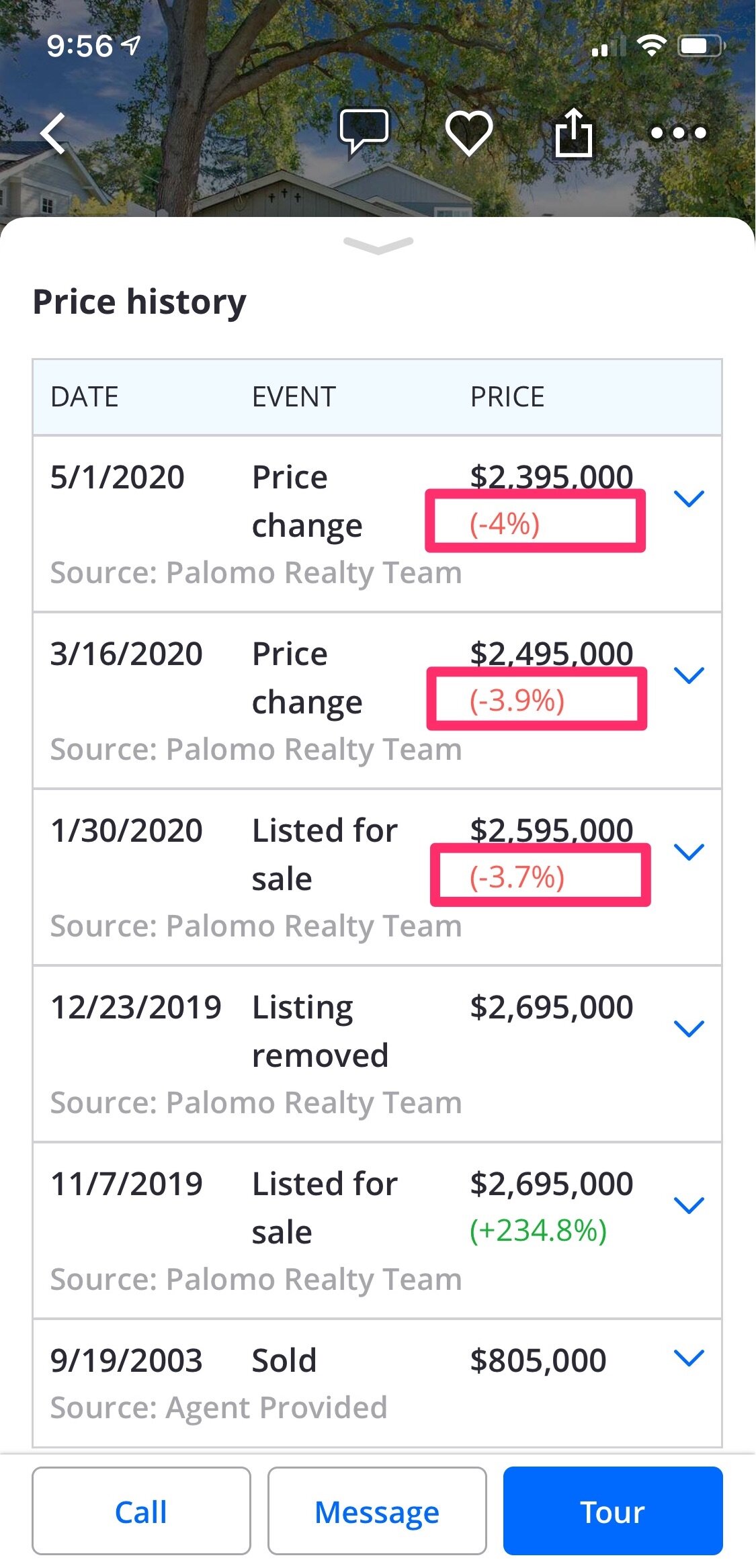
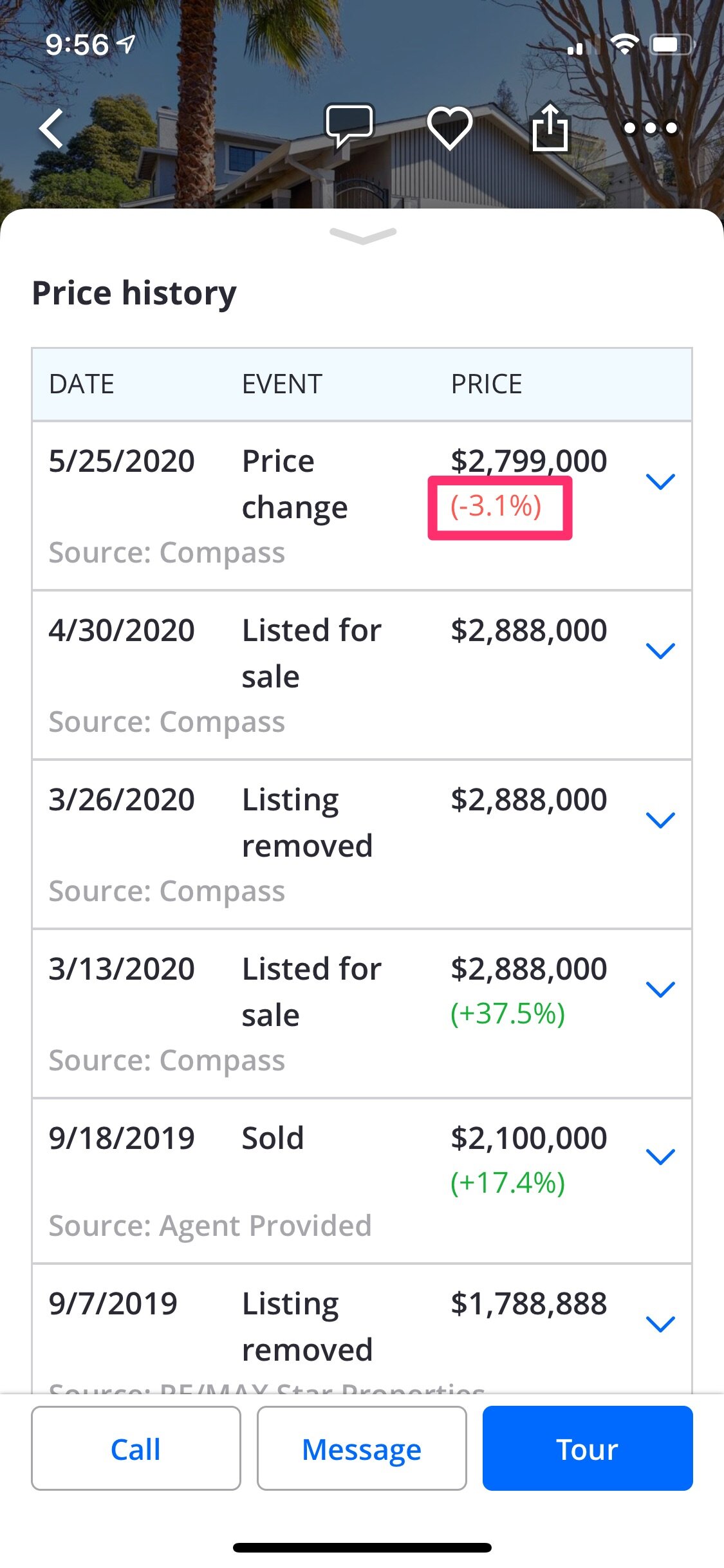
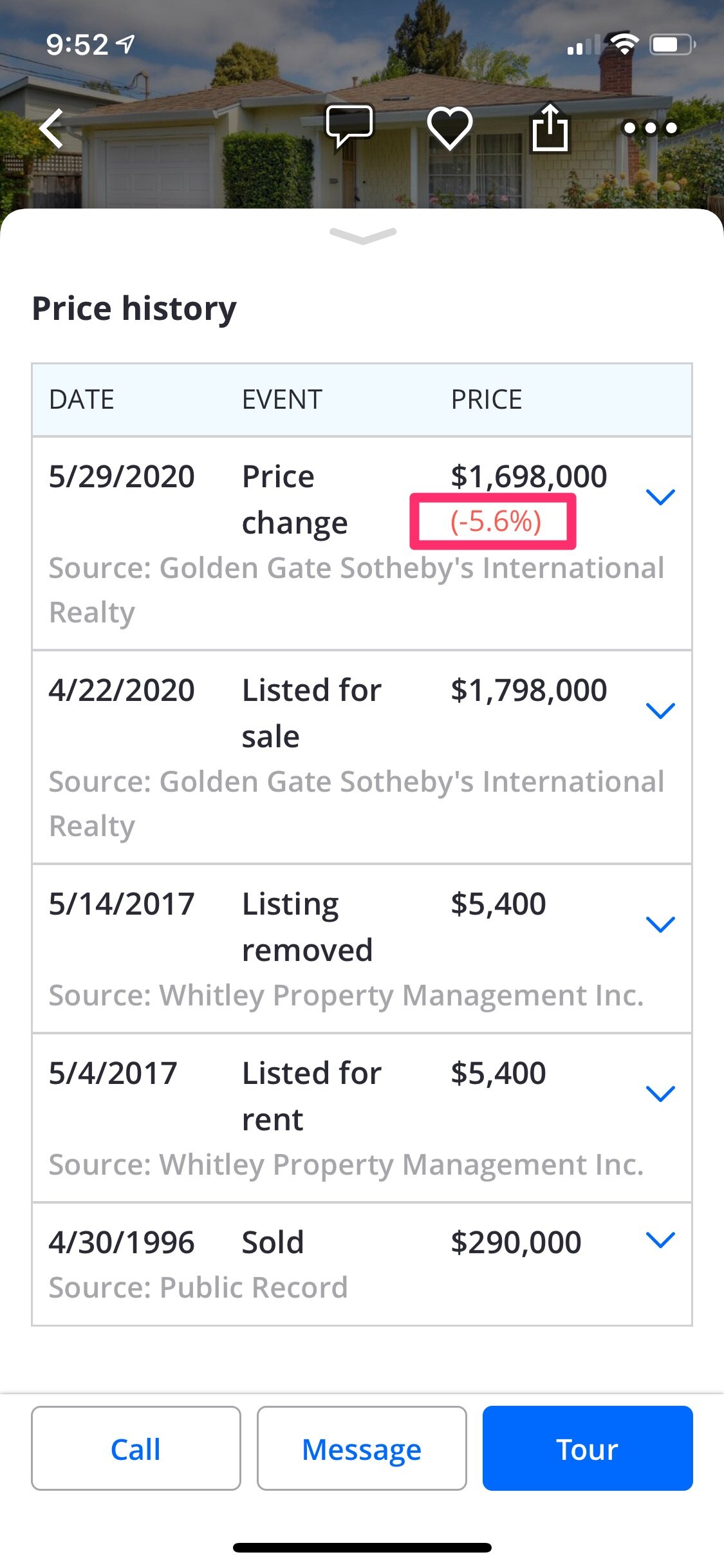
It seems safe to say there are deals out there. I’ve been seeing price drops around 5%, but remember that’s just the asking price. The bidding data above suggest that homes are closing for under asking for the first time in several years. With careful bargaining [23], I think it’s possible to do much better than a 5% discount.
If There are So Many Deals, Why Not Wait?
Residential real estate prices adjust more slowly than other assets and if the long-term trend is downward, you could imagine getting an even better deal in 6-12 months. I think this logic is probably flawed for two reasons:
You can’t time the market. As anyone who tried to time the stock market in March will tell you, every decline is different and it’s incredibly hard to be right both when you sell and buy. Plus, if you are buying a home purely as an investment, you’re overlooking far better vehicles to generate cash. A home is a form of shelter. Here in the Bay Area, it might also earn you some money, but it’s probably not a great idea to treat it like your stock portfolio. If you were already thinking about buying, you could easily save six figures by doing so now. Will you save every last cent you could have if you were capable of perfectly timing the market? No. But, if you wait too long, the price advantage may disappear completely.
The adjustment back to “normal” is likely to be faster than expected. Historically, pandemics do not inflict lasting damage on home prices. In fact, a recent historical analysis by Zillow [24] concluded that pandemics have a statistically insignificant impact on prices. Even much larger pandemics like the Spanish Flu in 1918 do not appear to have meaningfully impacted home prices. That suggests that what we’re seeing is likely to be short-lived as the economy gets back on its feet and things adjust towards a new normal that looks more like 2019.
Conclusion
Here’s a bit of historical context to put the current dip into perspective:
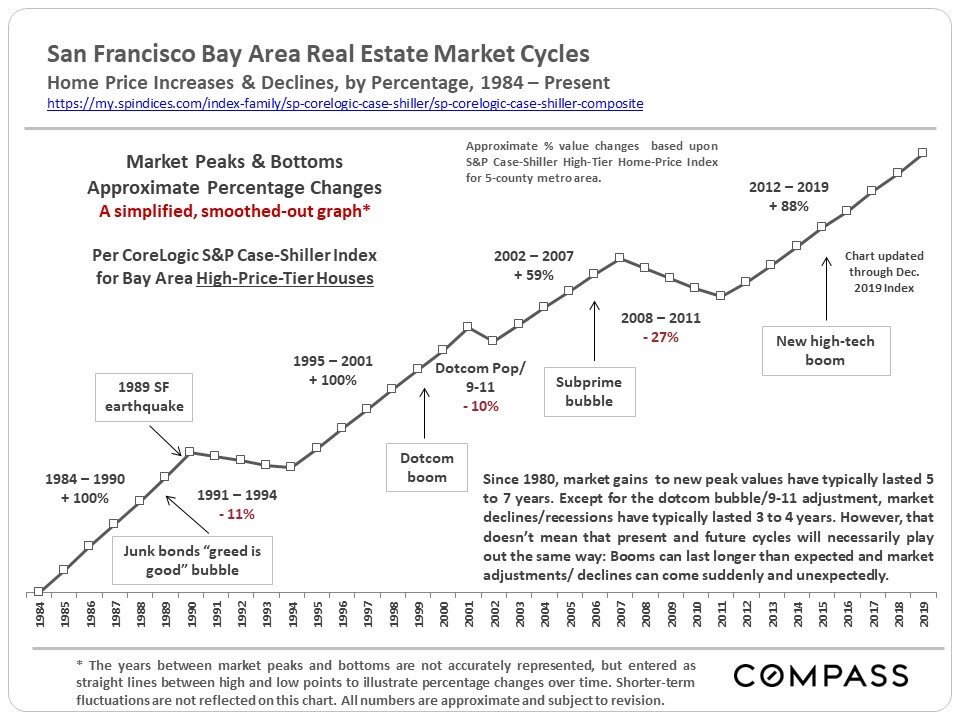
At -7%, Coronavirus has already been 63% as bad for housing prices as the 1989 Lomo Prieta earthquake, 70% as bad as the 2001 dot-com crash, and 26% as bad as the subprime crisis. It’s always possible that we’ll see an extended slide in prices as everyone starts working from home and Silicon Valley implodes. But millions of people chose to live as they did in 2019 for a reason. That consensus seems far more likely to prevail after the virus has passed. And when that normality returns, whatever specific form it takes, it seems likely there will still be too many jobs and too few houses in Silicon Valley.
Thanks to Ben, Nick, and Robert for reading over drafts of this and helping me to refine my thinking.
Sources
Coronavirus: Even Pandemic Can’t Slow Down Bay Area Home Prices (Mercury News, 5.6.20)
How Coronavirus is Impacting the Housing Market (Curbed, 4.23.20)
How a recession could impact the housing market (Curbed, 1.10.19)
Information From Past Pandemics, And What We Can Learn: A Literature Review (Zillow, 3.13.20)
Here’s where coronavirus will impact the housing market the most (Curbed 4.7.20)
Survival of the Fittest: The Real Estate Pandemic Survival Guide (Mike Delprete, 3.21.20)
Coronavirus is brewing a mortgage crisis (Curbed 4.8.20)
These markets could see the sharpest drop in home prices during coronavirus pandemic (CNBC 4.20.20)
On the dynamics of the primary housing market and the forecasting of house prices (2015)
Real Estate Buying Strategies During The COVID-19 Pandemic (Financial Samurai, 4.18.20)
California housing market feels full brunt of coronavirus outbreak in April, C.A.R. reports (PR Newswire 5.18.20)
How Does Price Elasticity Affect the Housing Industry? (The Nest, 2.12.19)
The declining elasticity of US housing supply (Vox, 2.25.20)
Tech companies’ work from home policies have some workers ready to flee Silicon Valley (The Verge, 5.15.20)
The Technology 202: The tech industry's shift to remote work will forever change Silicon Valley (Washington Post, 5.22.20)
Tech Workers Consider Escaping Silicon Valley’s Sky-High Rents (Bloomberg, 5.14.20)
Op-ed: The next Silicon Valley exodus — Over 25% of tech sector wants permanent work from home (CNBC, 5.19.20)
Walmart says its thousands of tech employees will continue remote work — even when pandemic subsides (5.28.20)
Tech jobs soar to all-time record in Bay Area (Mercury News, 7.5.19)
Size Ensures Success for 15 of the Largest Tech Companies in Silicon Valley (BuiltinSF, 2.5.2020)
Bay Area Housing Post-Pandemic: What’s in Store? (KQED, 5.14.20)
Reports detail Silicon Valley’s housing crisis pre-coronavirus (San Jose Spotlight, 5.13.20)
California Housing Market Report & Predictions 2020 (ManageCasa, 5.25.20)
Coronavirus: Home sales, prices expected to dip, recover slowly (Mercury News, 5.5.20)
2019 San Mateo Single Family Sales
Largest-technology-employers-in-Silicon-Valley
Infographic: San Mateo County Home Sales | 2019 Annual (San Mateo County Association of Realtors, 1.4.20)
San Francisco housing indicators (First Tuesday Journal, 5.26.20)
Alameda County Real Estate: Coronavirus Update (Compass Realty, 5.2020)
San Mateo County Real Estate: June 2020 Report (Compass Realty, 5.2020)
Remote Work Could Spark Housing Boom in Suburbs, Smaller Cities (WSJ, 5.30.20)
Buying A New Home: Wait Or Do It Now? (Forbes, 5/2020)
Millions Of Americans Skip Payments As Tidal Wave Of Defaults And Evictions Looms (NPR, 6.3.20)
SF, Silicon Valley rents plunge amid downturn: 'Never seen anything like it' (SF Chronicle, 6.1.20)
The Supply of Housing Has Become LESS Elastic (Marginal Revolution, 8.15.19)
Housing Costs Reduce the Return to Education (Marginal Revolution, 7.23.18)
Was there a Housing Price Bubble? Revisited (Marginal Revolution, 8.3.17)
S.F. sees ‘unprecedented’ drop in rent prices (Curbed, 6.2.20)
Zumper National Rent Report: June 2020 (Zumper, 6.1.20)
Is 2020 A Good Time To Buy San Francisco Bay Area Real Estate? (Financial Samurai, 5.2.20)
Longer-Run Economic Consequences of Pandemics (Federal Reserve Bank of San Francisco, 3.2020)
It could take two years for the economy to recover from the coronavirus pandemic (The Conversation, 5.30.20)
CBO’s Current Projections of Output, Employment, and Interest Rates and a Preliminary Look at Federal Deficits for 2020 and 2021 (CBO, 5.24.20)
The 15 Most Expensive Cities In The US And What They Really Cost (QuickenLoans, 9.20.19)
SF does not have the highest rents in the Bay Area (Curbed, 7.17.19)
The Top Reasons To Live And Work In San Francisco (Financial Samurai, 5.2020)
6 Top Cities for High-Paying Jobs (Monster.com, ???)
The 10 Best Cities for Jobs (US News and World Report, 5.19.2019)
Best Cities for Jobs (WalletHub, 1.3.2020)
Coronavirus Layoffs Remake Silicon Valley Job Market (WSJ, 5.20.20)
Layoffs (Techcrunch)
Just half of Americans plan on getting Covid-19 vaccine, poll shows (The Guardian, 5.27.20)
2 out of 3 tech workers would leave SF permanently if they could work remotely (SF Gate, 5.22.2020)
Bay Area homeownership hits seven-year low. Are out-of-control prices to blame? (The Mercury News, 7.25.19)
Should you buy a home in SF in 2020? (Curbed, 3.11.2020)
Low mortgage rates increasingly inaccessible for poor credit score borrowers (Bankrate, 5.27.2020)
Remote Work Isn’t the End of Silicon Valley, but It Is the End of Something (OneZero, 5.23.2020)
Once we can work from anywhere, does the world need Silicon Valley? (Fast Company, 6.8.2020)
How Much is the National Debt? What are the different measures used? (Peter G Peterson Foundation, 6.5.2020)
The 90% economy that lockdowns will leave behind (The Economist, 4.30.2020)
Bill Gates: Until coronavirus vaccine, world won't be 'truly normal' (Fox News, 4.5.2020)
Price-to-Rent Ratio in the 50 Largest U.S. Cities – 2020 Edition (Smart Asset, 4.22.2020)
Bay Area home sales fall by half in May vs. last year; prices off 2.5% (SF Chronicle, 6.16.2020)
National and Local Housing Market Recovery Trends (Realtor.com, 6.11.2020)
CoreLogic Pending Index Indicates Annual Price Growth holding up surprisingly well in May (CoreLogic, 5.26.2020)