Is Population Density the Reason Americans Can’t Discuss Politics?

A couple of weeks ago, I was at a work dinner with other members of my team. We were at an amazing restaurant in downtown Austin. The appetizers had come and gone, the drinks had arrived, and conversation had started to open up a bit from the perfunctory discussions of work projects and the weather. As inevitably happens, a lull in the conversation occurred and a member of our engineering team, Vinay (not his real name), piped up and asked if he could ask our table a somewhat sensitive question.
I love controversial conversations. I was also sitting right next to Vinay, so I piped right up and told him to fire away. There were about 8 people at our table, and I reckoned that even if the conversation got a bit spicy, the background din of the restaurant and organic cross-conversation could cover.
“Why is it impolite for Americans to discuss politics?”
He said it gently and urgently. It was obvious that he wasn’t spoiling for a heated conversation or baiting anyone at the table. He went on:
“In my hometown in India, everyone talks about politics all the time. And most of us don’t agree with one another. But that’s okay. I can even tease other people about our political disagreements and it doesn’t get in the way of friendships. Why isn’t that the case here in the US?”
People were fidgeting at the mere mention of the word politics, and another member of the engineering team sitting across from me chuckled as if to dispel the tension. “Well, it’s just something we’re all taught: politics and money aren’t topics for polite company!” He looked around as if to say “what can you do?”
But Vinay was having none of that.
“Sure, there is some social training here, but I’m betting you can all feel the tension of even just asking this question among coworkers. Why is that? Why can’t we disagree and remain friendly at work? It’s not like we are making policy decisions, we work at a tech company writing code.”
Another coworker interjected, “It’s so hard making friends as a parent, I don’t want to risk losing out on a friendship over political beliefs.” Several others nodded in agreement.
Vinay smiled in a self deprecating way, “I’m sorry, I have to push further on that. Why is it that a disagreement about something as abstract about politics is an acceptable reason to end a friendship? Do all Americans spend most of their weekends attending political rallies?”
I took a half-hearted swing at a response: “I think that in America, political beliefs and violence are more closely entwined than in other parts of the world. I’d be a bit worried about getting punched if I got too deep into politics with someone who disagreed with me.” I said that last bit sarcastically to help diffuse the tension.
Vinay smiled apologetically at me. “You know that people have been lynched in India in the last few months due to political violence, right? Americans think their politics are so polarized, but it’s worse in India right now. Has anyone been killed in America recently because they were a Democrat or Republican?”
I felt pretty stupid, I clearly didn’t have much of a handle on the political situation in India. I had to confess that nobody I’d heard of had died because of their party affiliation. And if that happened, I suspected I would have heard about it.
I meekly replied “I don’t think so, that’s a fair point.”
Fortunately, Vinay wasn’t interested in embarrassing me and continued, “In Bangalore, my family lives in an apartment building and when I go home to visit, I have conversations with a couple dozen people every day. If politics were as divisive as here in America, I’d have no friends left.”
That got me thinking. “You know, one thing that’s very different between most of the US and most of India is population density. I live in a suburb here in Austin and I have to actually go out of my way to see my neighbors at all.”
A couple of my coworkers were shaking their heads in agreement.
“Most of the time, it’s as if I don’t have neighbors. There’s a lot of physical space separating humans. If I have even a slightly uncomfortable situation with someone, it would be easy for me to never see them again.”
Vinay thought about that for a moment. “I couldn’t avoid most of the people in my apartment building if I wanted to, I almost trip over them when I come and go.”
Another coworker added. “This all lines up with my experiences. I’ve been trying to find a tennis partner to play with and the one guy that’s been the most dependable lives about 20 minutes away from me. If either of us said anything to offend one another, it would be super easy to make excuses not to play again. That’s one of the reasons we don’t talk about politics.”
As he concluded that thought, the entrees started to arrive. Vinay grudgingly accepted that something as trivial as population density could be an important catalyst for forming a cultural norm against offending others.
More food came, we drank and talked about other topics. You could feel the tension draining away as the dreaded “P” word was replaced with other more polite subjects.
Choosing to Have Kids During the End Times

My best friend believes that humanity has a 60% probability of becoming extinct in the next 15 years. He’s one of the smartest people I know and is an extremely well-adjusted and high-functioning person. He scoffs at conspiracy theories, doesn’t wear tin foil hats, and has an abiding love of statistics. His belief is terrifying because it derives not from fevered information bubble YouTube binges, but from years of methodical research and predictions.
But I don’t need his bleak predictions to feel like the world is ending. I’m apocalyptic enough on my own for that. And now that I have 3 young children, I’m more worried for them than I am for myself. What kind of world did I bring them into?
Is it wrong to have kids when you are aware of all the risks? Am I to blame if my children suffer through a world-ending event?
It’s Not Just In Your Head
Last summer at a family gathering, I asked my parents about my feelings of dread.
“Mom and Dad, is it just me or is the world ending? Are my concerns just what it’s like to be the father of 3 young kids?”
My parents are some of the most rational and loving humans I’ve ever met. I’ve always been their paranoid, obsessive son. The kind of son you have to constantly tell to relax and not to worry. Take a deep breath, things aren’t that bad, George.
“The world is a lot scarier now than it was when you were little.” I almost couldn’t believe they said it. Maybe they had misunderstood my question?
Later that weekend, I asked my 93-year-old grandmother. She looked at me with pain in her eyes and said, “I’m worried about what your generation will have to face.”
These Are the Ways the World Ends

And those are just the risks that have a decent shot at ending our species. If you’re more conservative and only care about you and your family living, you’ve got lots of other risks to worry about: political instability, war, and the normal plagues.
Most people probably fall into this camp, and the sad fact is that it’s historically mundane for entire families, cities, and nations to be extinguished unceremoniously.
Let’s stop here for a moment and return to the main point of this post: the kids.
As a parent of young children, the thought of even these mundane calamities befalling my children is heart-breaking. No. Those words don’t quite do the emotion justice.
If I think of my children dying, a lump forms in my throat. I lose the ability to function. My brain freezes and I teeter on the brink of tears. The idea of this happening to every person’s kids is unfathomable. It’s pointless to multiply infinite suffering by anything.
So perhaps it is rational to just not have children?
Are We Just Species-Level Hypochondriacs?
People have been predicting the end of the world since there were words to record the sentiment. I’m fond of this Wikipedia article: list of dates predicted for apocalyptic events. And lest you think that all of these predictions are just about a religious end of the world, don’t overlook the predictions about floods, comets, and earthquakes.
It’s tempting to conclude that humans are just species-level hypochondriacs. Even before nuclear weapons, prophets were envisioning the end of the world in a hundred different ways.
We now know that apart from the mundane firestorms, floods, tsunamis, earthquakes, hurricanes, tornadoes, and heat waves, there are more exotic and deadly natural phenomenon:
The Chicxulub asteroid impact killed ~75% of plant and animal species on earth. It was only 1 of 3 truly enormous asteroids known to have impacted the Earth.
Massive volcanic eruptions are strongly linked with 4 out of the 5 major extinction events in Earth’s geologic record.
While all of the major asteroid impact events and mass extinction events predate our species by hundreds of millions of years, far smaller events happen regularly. For a sobering read, check out the Tunguska event.
So yeah, nature is out to kill us, and that’s stressful. But that’s sort of our species’ baseline. Me, my parents, and my grandmother all seem to be cluing into something more modern and ominous.
Many Existential Risks Really Are New
Our species has probably existed on earth for ~190,000 years. Four out of five potential ways to end ourselves were created in the last 100 years. That means that the bulk of our species’ known existential risk has been created in the last .05% of our collective existence. Two of those risks (AI and pandemics) have really only become existentially threatening in the last 20 years. That’s .01% of our species’ existence.
Against the backdrop of massively increased risk, we’ve also created instantaneous worldwide communication and algorithmic information bubbles. That seems like the perfect storm for anxious people.
Whenever I start down this path, I reflexively think “well, we haven’t destroyed ourselves yet, so maybe I’m just worrying too much.” But we’ve come alarmingly close more than you’d think:
There have been at least 20 nuclear close calls since the creation of nuclear weapons. Some incidents got so close it makes me nauseous to read the accounts.
Covid-19 killed ~27M people and was probably created through non-nefarious gain-of-function research plus an innocuous containment leak. Oopsie.
Climate change is thought to have already killed ~2M people.
So, we’ve already nearly ended our civilization with nukes about two dozen times and millions of people have already been killed by two of the other major risk vectors. And unlike previous generations, we are cursed with the knowledge of the risks, the near-misses, and the accelerating rate of change.
Given all of the above, I have to conclude that it’s fairly rational to be more worried about our civilization and our children than previous generations.
So, Why Have Kids?
If you’ve read this far, it may seem stupid to invest time and energy bringing children into such a risky world. Selfishly, kids take a lot of work and cost a lot. If you think our civilization will end in 5 years, why not remain child-free, retire early, and sip cocktails in the Caribbean? Even if cocktail-sipping in the tropics isn’t your thing, isn’t it philosophically cruel to bring kids into a world knowing that there is an increased risk of suffering and dying young?
I think that if you believe the world is going to end in less than 5 years and you don’t already have kids, then yeah, maybe don’t do that. But if you think we have more than 5 years and / or you already have kids, I think investing in them is essential and valuable.
The Utilitarian Argument for Kids
I’ve read a bunch about the psychology of happiness. Daniel Kahneman proposes two ways of understanding the experience of happiness: the experiencing self and the reflecting self. The experiencing self is what everyone is most familiar with. It’s just how you feel while you live your life. It’s how you feel while you read these words.
The reflecting self is different. How did you feel when you last went on vacation? What was something particularly fun that happened in the last month or so? Spend a couple seconds thinking about those experiences. Remember all the little details: the events, the people, colors, smells, and sensations. This is your reflecting self.
Kahneman and others have shown that we think very differently about our lives in these two modes. And most importantly, he has shown that we spend the vast, vast majority of our lives experiencing rather than reflecting.
This makes intuitive sense: most people spend orders of magnitude more time just living life than thinking about living life.
I think this simple fact makes for a pretty strong argument to have kids. I’m not a strict philosophical utilitarian, but follow me down the utilitarian path for just a minute here.
Let’s say that you have a kid and every hour of that child’s life they get to experience a range of emotions that net out slightly positive. Sure, there are tantrums, pain, and displeasure, but there’s also lots of joy, excitement, and love. Over 5 years, that child gets to experience 25,550 hours of waking, positive life.
If the world gets nuked out of existence, they might have a couple of weeks of terror and pain followed by death. Even if that terror and pain last for 3 months and every single waking second is miserable, that’s still only 5% of their life. More likely, they can find joy even in the most grim circumstances. If this point seems hard to believe, read Man’s Search for Meaning.
Also, as a father of young children, I can attest that young kids seem from the outside to be very joyful most of the time. They aren’t plagued by the morose moods of adults. The movie Inside Out did a good job of visualizing this early-life psychological simplicity.
So, unless the end of the world is extremely drawn out and painful and your kid is already prone to suffer an unusual amount of physical or mental pain, I think having kids creates net-positive human experience … if you think the child can live beyond early childhood.
Why the caveat about age? Because among most parents I know, raising kids from 0-5 is a very net-negative experience. Some people love babies and toddlers, but I haven’t met anyone yet that loves them for 90+ hours a week.
The Phenomenological Argument for Kids
If you’ve done your philosophical homework, you may have read Heidegger or Sartre. They represent a branch of philosophical thought called phenomenology. One of the tenets of that system of thought is that human experience is inherently valuable, regardless of the quality of that experience.
I’m not fully convinced of this in the extreme cases. For instance, I think it’s wrong for someone dying of excruciatingly painful and terminal cancer to be denied euthanasia on the basis that their suffering is meaningful. But for more mundane examples, I agree that human experience is superior to none at all. I think most people fundamentally agree. It’s pretty obvious why: we’re all human and the vast majority of us inherently value other members of our species.
This school of thought would argue that a child’s existence and consciousness are valuable, regardless of whether that child is happy or sad. I think it’s tough to quantify this value, but I agree in principle that our species is enriched by having another child exist vs not exist.
The Hedonic Treadmill Argument for Kids
Maybe you aren’t convinced by esoteric philosophical arguments. That’s fine, I think there’s still a very strong argument for having kids if you want to. It’s called the Hedonic Treadmill. Empirical studies find time and time again that most people revert to a happiness set point, regardless of what life throws at them.
This was popularized in the highly influential and oft-quoted study about recent lottery winners and paraplegics. Researchers enlisted people who had recently won the state lottery and people who had recently become paraplegics or quadriplegics due to an accident. They asked those participants to rate their happiness while experiencing everyday events like watching TV and talking to friends. What they found was that in the long run, there wasn’t much difference between the two groups despite their substantially different life circumstances.
Put more simply, we can adapt to basically anything life hurls at us, and for most of us, we’ll probably be about as happy before and after. This effect has been labeled the Hedonic Treadmill. Like walking on a treadmill, our brains quickly adapt to new life circumstances and we tend to return to a happiness “set point.”
Why is this applicable to having children? Because it strongly suggests that over the long term, you’ll be about as happy with kids as without them.
I can hear some folks reading this now and saying “whoa, hold on a minute, one of your arguments for having kids is that they probably won’t make you more miserable?!”. But I actually think that is a very strong argument. Bear with me for a moment.
I think Jean Twenge made a pretty compelling argument in her book Generations that despite their rhetoric, most young adults that choose not to have children today do so for selfish reasons. But what the Hedonic Treadmill strongly suggests is that avoiding kids so that you can enjoy your life more won’t work for most people.
You might think “without kids, I can have tons more fun, I can go hiking and go to parties and live in an expensive city and play video games all day!”. And those things are fun, but only for a while. After you finish playing your 30th video game of the year, you’ll probably want to do something else. After living in San Francisco for 5 years, you might want to try living somewhere else.
Personally, I think parents in the US really are less happy on average for the first 3-5 years. Childcare is criminally expensive. Most parents don’t get any leave from their work. Young children induce sleeplessness, sickness, and marital tension. And in reaction to all these changes, many parents do stressful things like move out of big cities, change jobs, and remodel homes. All of that pushes a lot of parents to be less happy moment-to-moment.
In the long term, though, parents are about as happy as non-parents.
If you think that the world is going to end next year, there’s a pretty strong argument not to have kids because you’ll struggle less in those 12 months. But if you think the world will last at least 5-10 years, there’s a pretty good chance that having kids won’t make much difference to your long-term happiness.
Also no, having a kid isn’t an environmentally immoral action.
The Life Regret Argument for Kids
People regret things they didn’t do more than the things they do. That’s true even if the things they do end badly.
Even with advancements in reproductive technology and medical care, if you want to have kids, it’s still a very good idea to have them when you’re relatively young. So, unlike some other big decisions in life, it’s not feasible to wait and see indefinitely.
I’m a firm believer that people who don’t strongly want children shouldn’t have them. The US cultural norm that you grow up, marry, and have kids has become less prevalent, but is still too strong. If you don’t want kids, you shouldn’t have them. It’s that simple. And anyone that pressures or shames you for that decision is wrong.
If you do feel strongly that you want kids, but are worried about the state of the world, however, things are more tricky. If you’re in your mid-30s and feel strongly that you want kids, but decide not to do so because of political strife, climate change, nuclear war, etc, you may come to regret the decision. And there are very few options to go back and change your mind.
Why I’m Raising Kids in the End Times
I’ve struggled with depression my entire life. I’m not proud of it, but there is a certain comfort in the thought of surrendering to nihilism. What’s the point in struggling to raise children when there’s a non-trivial chance Putin will end the world in 2026 with the flip of a button? When you’re in that mind-space, you’re numb to all the fears and concerns.
But for all the reasons I’ve outlined above, I still think having children is worthwhile. Is it always pleasant? No. Does being a parent heighten my concerns about existential threats? Yes. But to simply surrender to nihilism and depression would make the world a worse place. If for no other reason than to show my children how I want them to act, I’m not willing to do that.
Top 10 Nonfiction Books of 2023 and What They Taught Me
Here are the top 10 nonfiction books I read in 2023 and 3 things that each of them taught me.

★★★★★ An Immense World by Ed Yong
An organism’s umwelt (pronounced “um-velt”) is a description of what they can perceive. Many organisms have such different umwelt that they are essentially existing in different universes without any perception of one another.
It makes no sense to make statements like “a dog’s nose is 10,000x as sensitive as a humans.” Dogs almost certainly perceive the world in radically different ways unrelated to the number of nerve endings in their olfactory bulbs.
Humans only perceive a very narrow range of possible sensory signals. To take a single example, elephants can communicate with one another using subsonic frequencies that are imperceptible to us. In a very real sense, the world is fundamentally different depending on your species.

★★★★★ Chip War by Chris Miller
Only 3 companies in the world are capable of physically manufacturing the most advanced computer chips that power everything from laptop computers to cell phones: TSMC (Taiwanese Semiconductor Manufacturing Corporation), Samsung, and Intel.
Only 1 company in the world is capable of creating the specialized ultra-UV lithography machines that these three chip fabs require: ASML. It’s lithography machines cost $300-400M each. It takes 13 containers and 250 crates to ship a single machine.
Because chip fabrication facilities are so mind-bogglingly expensive to build and run, many companies known for their electronics design (Apple, Nvidia, et al) don’t physically manufacture their own chips. They design chips which are then fabricated by TSMC, Samsung, or Intel.

★★★★★ The School of Life: An Emotional Education
This book defies the pattern of science-y nonfiction. It’s not, in my opinion, especially useful to summarize in bullet form. You’ll have to just check it out and see if you agree with the points.
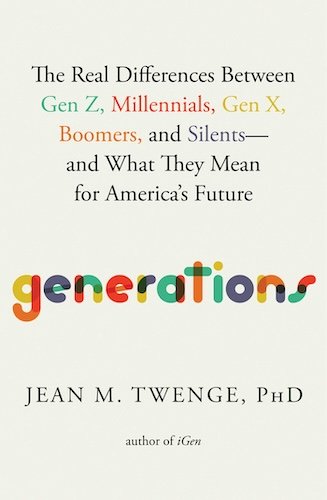
★★★★★ Generations by Jean M. Twenge
I used to think that generations were a bit like astrology: make-believe concepts that people used to justify pre-existing biases. After reading this book, I realize that view is probably too extreme. There are real differences between differently-aged people. Whether you’re comfortable lumping them together using birth years or not doesn’t have anything to do with large and observable differences in the way those people think and act. So by all means go ahead and disagree with whether “millennials” start in 1979 or 1982, but people born around that time have significantly different life trajectories to people born in the late 1950s.
Younger people’s (Gen Z) mental health started to decline dramatically starting in 2012. A broad consensus is forming that the cause of that decline is due to cell phone use and social networking in particular. The impact has most heavily impacted young women.
The falling birth rate in developed nations is probably being driven by increasingly capable technology, wealth, and social acceptance of individualistic behaviors. The alarmist rhetoric about people not having babies because of climate change or overpopulation don’t hold up under research scrutiny. Most people that don’t have children do it for the obvious reason: children are insanely expensive and inconvenient. In the past, more communal societies distributed the cost of raising kids at the same time that it put pressure on individuals to have families to adhere to social norms. As societies have become more individualistic, the cost of raising kids has skyrocketed for parents at the same time as society has punished adults less and less for choosing not to have kids in the first place. Hence, fewer babies.
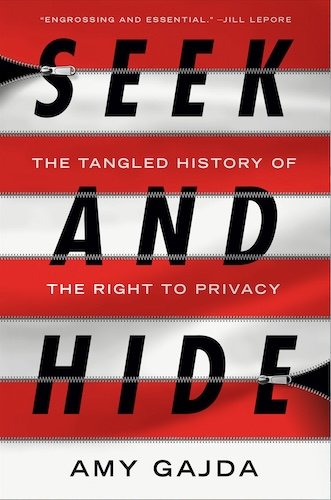
★★★★★ Seek and Hide by Amy Gajda
The right to privacy has been a part of English common law in some form or other for hundreds of years. Americans imported it into the original 13 colonies, but enforcement has always been inconsistent.
At the end of the day, the main battles in privacy law enforcement have centered around relatively powerful people attempting to obscure their deeds from the public. US society has gone through periods where it was deemed more and less acceptable to muckrake and expose those secrets. During the late 1790s, for instance, journalists and muckrakers had a largely free hand to malign politicians and businesspeople. During the early and mid-20th century, by contrast, the right of privacy was more strictly enforced and courts ruled more in favor of protecting individual’s private details.
We are currently in what Gadja thinks is the end of a period of particularly lopsided privacy enforcement that protects journalists and internet platforms.

★★★★★ Immune by Philipp Dettmer
The immune system is so dangerous to the body’s tissue that there are an almost mind-boggling number of steps, checks, and safeguards on it’s activation. So, if you ever see a medication that promises to “increase immune response” be skeptical: you don’t want an over-active immune system.
The body keeps a chemical memory of every pathogen it has ever encountered. That “memory” can be activated days, months, or years after first encounter. It also means that if you think of our immune system as a library of sorts, it is one of the most impressive information storage systems.
When your tissue is infected, it becomes warm to the touch. This is a localized version of having a high temperature during a bout with the flu. Scientists currently hypothesize that the added heat does help a bit to kill off pathogenic invaders, but mostly, it’s to facilitate easier and faster protein synthesis for the immune system. Basically, we get warmer when we’re fighting off a bacterium or virus because the immune system can more efficiently create warrior cells at slightly higher temperatures.
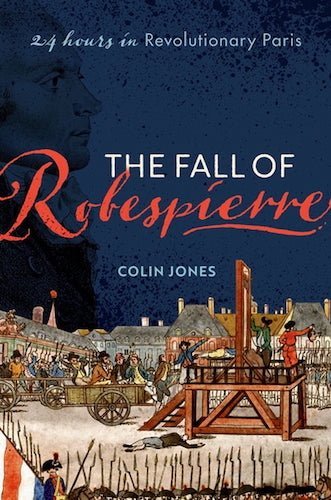
★★★★★ The Fall of Robespierre by Colin Jones
Robespierre’s contemporary oratory and rhetoric sounds unnervingly similar to modern populist leaders.
As with most tyrants, Robespierre held onto power through the use of violence and scare tactics. But this was also his undoing. The primary reason he was removed from power wasn’t due to a widespread popular backlash against his methods, it was because other powerful members of the revolutionary government were concerned that he might kill them.
There were many unlikely events that led to Robespierre’s removal and execution. If any one of them had ended differently, there’s a pretty good chance he would have survived and continued running the revolutionary government. In one particularly comedic situation, overwhelming military strength was arrayed against Robespierre’s enemies and it looked like the entire rebellion was over. But the leader of the that military detachment misunderstood how many guards there were in a government building. Fearing a clash with a non-existent enemy and fearing for his own title and office, he chose instead to retreat.

★★★★★ Good Economics for Hard Times by Abhijit V. Banerjee and Esther Duflo
International trade benefits developing nations far more than it benefits the US. The authors estimate that if all international US trade were halted tomorrow, it would only cost American consumers about 2.5% more per year to source all goods and services domestically. This isn’t a good argument to cease international trade, though. Hundreds of millions of people worldwide have better lives due to trade with the US. It is, however, an important fact to keep in mind when creating policy.
One of the primary hypotheses the authors put forward to explain rising income and wealth inequality in the US is a lack of a social safety net. While it seems like an obviously good idea on the surface for recently-laid-off workers in Cleveland to move to San Francisco to take advantage of more plentiful and highly-paid work, most can’t afford to do that. That’s not to say that they are modern day Okies fleeing the dustbowl with no money for gasoline. But expensive housing, a lack of subsidized childcare, and inaccessible health benefits make most disenfranchised workers rationally conclude that it’s better to remain in a place where they have social ties, even if there is no gainful employment. This perpetuates economic inequality. The laid off workers get poorer in small rural towns while coastal knowledge workers get richer in big cities.
In response to growing automation and AI-fueled job destruction, we could significantly increase social stability by offering displaced workers government-subsidized jobs doing work that robots can’t do such as in-person teaching, caring for children, or producing certain kinds of art. The way to identify these heavily-impacted people, however, will be difficult and contentious.

★★★★☆ Entangled Life by Merlin Sheldrake
Most fungi are not visible to us humans. Mushrooms are only the fruiting part of most fungi plants, and not every fungi species distributes it’s reproductive material via the air. The overwhelming mass of fungi on earth are contained in rocks and topsoil.
The whole premise of the video game and TV show The Last of Us is way less far-fetched at a scientific level than I had expected. Seriously, it’s a bit terrifying how advanced and pervasive fungi are and how little we can do to control them.
The root systems of most plants offload the production of necessary chemical symbiotic fungi species. That means that most trees and plant species would be incapable of existing on the planet without fungi.
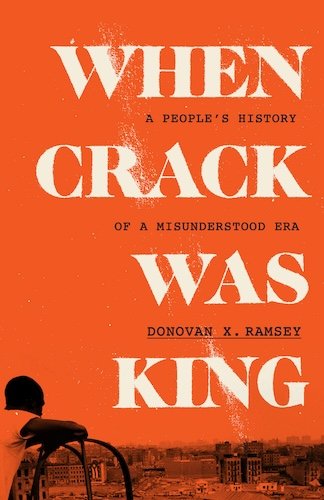
★★★★☆ When Crack was King by Donovan X. Ramsey
Crack babies don’t exist. Or rather, the impact of crack on pregnancy outcomes was massively over-stated during the late 1980s and early 1990s to fit with a racist narrative of inner city black women and their lifestyle choices.
There is actually fairly solid evidence that the US federal government colluded with large, known cocaine traffickers during the 1980s as part of the Iran-Contra affair. While there isn’t a direct link between entities like the CIA and cocaine distribution in inner-city neighborhoods, the conspiracy theory about the US government using cocaine to control black communities isn’t as misplaced as I had assumed.
The end of the crack epidemic appears to have largely been driven by young people witnessing the ravages of the drug on their communities and abstaining. Ramsey even suggests that influential hip hop artists like Dr. Dre may have intentionally glorified the use of less destructive drugs like marijuana to discourage kids from using cocaine, crack, and heroine.
Other Books I Read in Q4
★★★★☆ Platonic, by Marisa G. Franco
★★★★☆ Stalin by Oleg V. Khlevniuk
★★★★☆ When Crack was King by Donovan X. Ramsey
★★★☆☆ Growing Up Human by Brenna Hassett
★★★☆☆ A Storm of Witchcraft by Emerson W. Baker
★★★☆☆ How to Survive History by Cody Cassidy
★★★☆☆ Gangsters vs. Nazis by Michael Benson
★★★☆☆ What the Ermine Saw by Eden Collinsworth
★★★☆☆ Homegrown by Jeffrey Toobin
★★★☆☆ Under Alien Skies by Phil Plait
★★★☆☆ Things Are Never So Bad That They Can’t Get Worse by William Neuman
★★★☆☆ The Dive by Stephen McGinty
★★☆☆☆ The Declassification Engine by Matthew Connelly
★☆☆☆☆ Fortune’s Bazaar by Vaudine England
★☆☆☆☆ I Know Who You Are by Barbara Rae-Venter
2023 Reading Update
So far in 2023, I’ve read 24 books and gave up on 7. I would have written about all these awesome books earlier, but writing on my new personal finance blog has taken up more of my time than previously.
If you’ve read any good nonfiction books, please pass the recommendations my way. I’m always looking for new material!
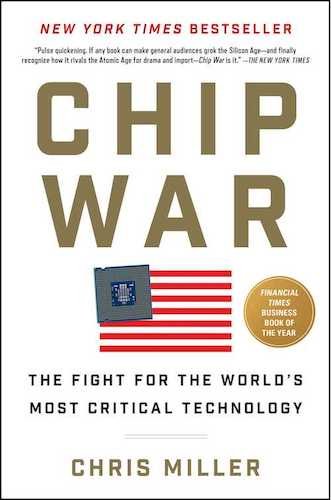
★★★★★ Chip War
If you read one book this year, I would recommend this one. The creation of microprocessor chips isn’t just important to techies and nerds anymore. The country that can produce more and better chips will prevail over all other countries. Miller not only describes the incredibly fascinating way in which chips are made, but makes a compelling argument about the hot topic of chip dominance between China and the US. I couldn’t put this one down and now really want to take a tour of a chip fab if I ever get the chance.
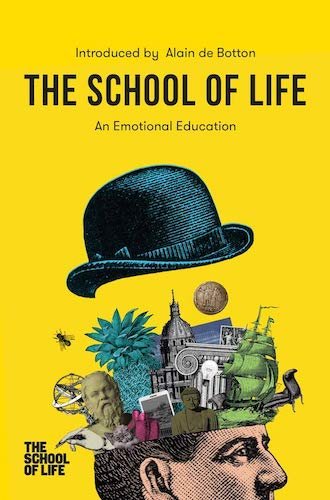
★★★★★ The School of Life
The School of Life doesn’t get everything correct, but there’s enough really good wisdom in here to make it a must read. This was initially hard for me to get into because it’s so thoroughly unscientific. At no point does this devolve into the popular science trope of citing social science research. You’re never asked to believe in the outcomes of a study conducted at such and such university that proves that love is real. But I think that’s the key part of the charm: it’s direct and even when it misses, it’s still thought-provoking.
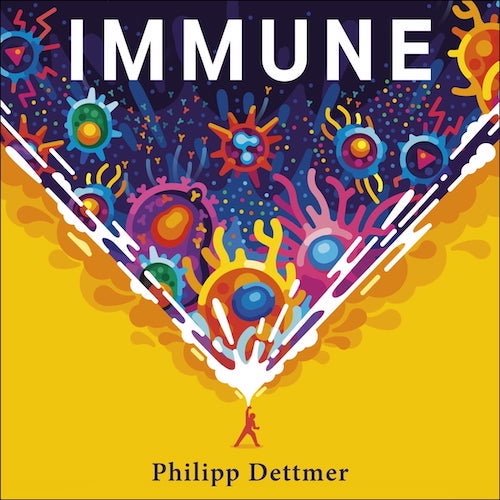
★★★★★ Immune
I remember taking biology 120 in college: it was a big, long, and somewhat boring lecture series. This book is the opposite of that. Philipp Dettmer does an incredible job of making the specific mechanics of our immune systems accessible and fascinating. There’s so much detail in here that I almost immediately forgot most of it, but I came away with a deep, abiding understanding of the absolutely absurd level of complexity built into how our bodies keep us healthy.
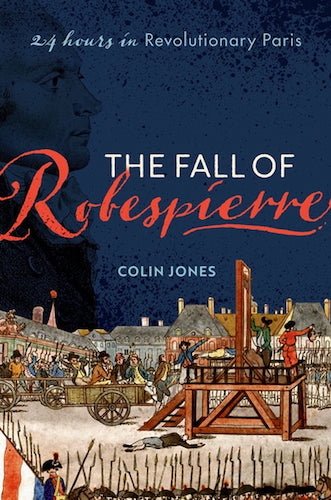
★★★★★ The Fall of Robespierre
In my opinion, this is history writing at it’s finest. Rather than describing the events of the French revolution at a high level (booooorrriinnng), he zooms in and tells the deeply human, messy, and interconnected history of how a seminal historical event actually unfolded. What is often described in history textbooks in a couple of sentences and comes across as dry and predetermined here comes alive with ambiguity, reversals of fortune, random strokes of good luck, and human tension. I wish that I was taught this sort of history during my time in school.
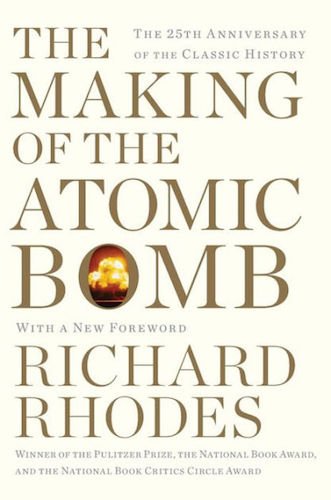
★★★★☆ The Making of the Atomic Bomb
This would have gotten 5/5 stars, but good lord does Rhodes take a long time focusing on the history of physics. Easily the first half of the book is just focused on the extremely detailed history of the physicists and experiments that led up to what the title promises: the creation of the atomic bomb. And I get it, the title is about the making of the bomb, but I would have appreciated a longer epitaph about what some of the key figures did after the Manhattan Project. I was especially curious to learn what many thought about their contributions decades later.
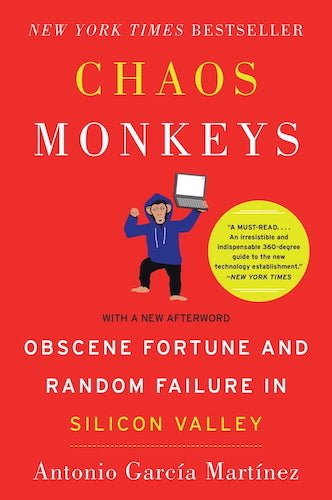
★★★★☆ Chaos Monkeys
This one won’t change the way you see the world in a fundamental way, but good lord is it entertaining and accurate. Martinez was a couple of years ahead of me going through YCombinator and working at Facebook. But our experiences overlapped so closely that I feel like I am in a unique position to judge the accuracy of this book. And it is 100% accurate. If you ever wanted to know what it’s actually like to be funded by YC, work at Meta, or just be a techie in Silicon Valley, look no further.

★★★★☆ Barbarians at the Gate
This one deserves it’s reputation as a classic among business books. It’s well-researched, readable, and interesting at a human level. Personally, I think the people most likely to benefit from reading this book are younger people who don’t have a lot of working experience yet. It does a really good job of explaining how business at big corporations is really conducted. Obviously, the cast of characters here were chosen because they are almost caricatures of themselves, but if you’ve worked in corporate America long enough, you’ve met every single person described in these pages.

★★★★☆ Preparing for War
Onishi might be wrong about his primary thesis, but it is at least consistent and may answer a question that’s been on my mind for the last 8 years: why is conservative political ideology so nonsensical? His theory is that most conservative rhetoric is an intentional misdirection from the real truth that the only consistent Republican system of belief is white supremacy. That’s almost certainly an oversimplification for any one conservative person’s system of beliefs, but the shoe does seem to fit the party’s direction at the national level. At the very least, I’d encourage you to read it and make your own assessment of his hypothesis.
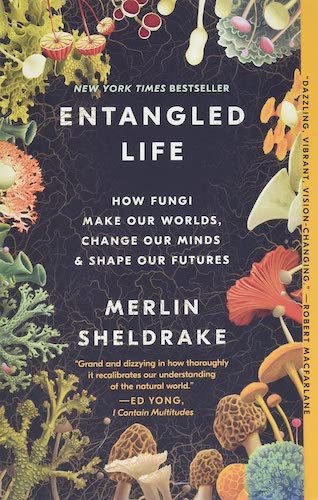
★★★★☆ Entangled Life
I had actually been avoiding this one despite the insanely positive reviews. I mean, c’mon, how much is there to know about mushrooms? But I was wrong and the reviews were right: this one really is insanely interesting. If, like me, you thought that fungi were only just mushrooms then you should do yourself a favor and read this book. It was so good that I found myself spontaneously gushing about it to coworkers.

★★★★☆ The Secret Life of Groceries
This book could have easily devolved into another Supersize Me, editorialized expose about grocery stores, but it rises above that. I learned a lot about why Trader Joes is so likable, why it’s nearly impossible for good food to be sold at large box stores, and why the food we eat is neither so terrible as journalists would have you believe or as good as food marketers claim it is.
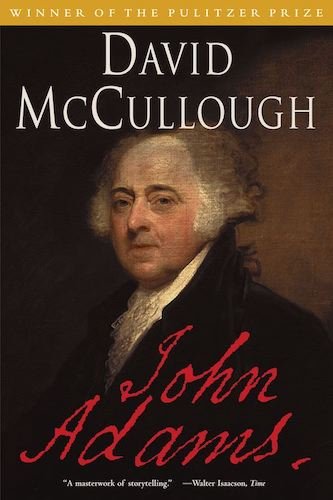
★★★★☆ John Adams
I love the musical Hamilton. The show briefly covers the Adams administration, but I realized recently that I didn’t really know much about him nor his work. And of course, David McCullough is a nonfiction legend. I’ve read most of his books, and they’re all great.
This might have scored higher with me if I hadn’t accidentally downloaded the abridged version of the audio book. So, don’t do that if you actually want to learn about Adams. Otherwise, I really enjoyed refreshing my knowledge on the founders. I came away thinking that Hamilton was probably the lesser of the two men, but the musical is still great.
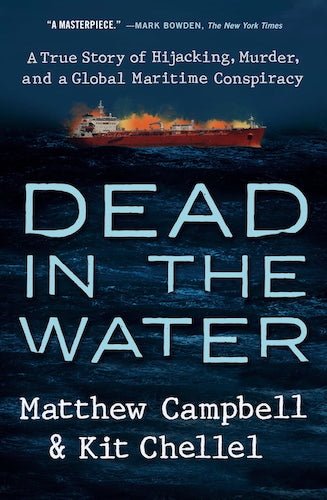
★★★☆☆ Dead in the Water
I have a fascination with large boats. I have no idea why. But if you’re like me and maritime shipping and boats are at all interesting to you, this one will definitely keep your turning the pages. It’s about what is probably the largest known maritime insurance fraud that occurred about 15 years ago. It’s got everything you want in a story: a bad guy, a good guy, murder, fraud, extortion, and … big boats.
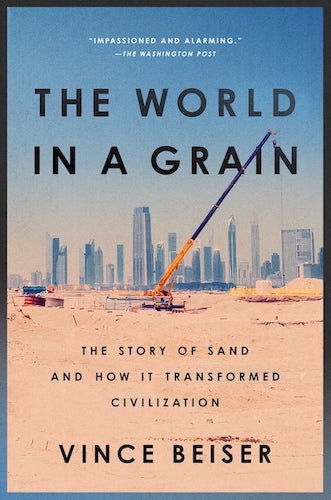
★★★☆☆ The World in a Grain
I was worried that this book would fall into the category of pop-sci books that became a fad in the mid 2010s. They all follow the same pattern and pitch: Simple Noun: How Simple Noun is Important to Every Person That Has Ever Lived and May Have Killed Your Parents. I’ve read a couple books in this genre and they can be pretty cloying in their fascination with their subject. But this one is significantly better than the rest of it’s ilk. For one, I think Beiser’s point about the importance of sand to the modern world is actually accurate. From concrete to glass to silicon chips, we really do depend on sand quite a bit. And I knew next to nothing about it prior to reading this fun book.
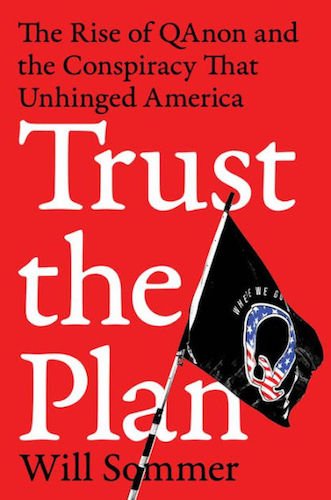
★★★☆☆ Trust the Plan
Given how unhinged the political right has become in the US and the visibility of this particular conspiracy theory to adherents of that ideology, I felt I needed to better understand what QAnon really is about. It turns out it’s even more insane and vapid than I had assumed. I had thought that perhaps, due to the relatively high profile this particular conspiracy theory had attained, there would be more to it than random posts on 4Chan, but …. nope. Having read it, I feel equal parts dismayed and educated.

★★★☆☆ Uneasy Street
I love reading about how people think about and understand money. And this book does a good job of accurately representing how wealthy people understand and cope with their own wealth. This one didn’t cause me to fundamentally reevaluate my life or anything, but it was a fun read and I think Sherman did a good job avoiding the popular “eat the rich” narrative.
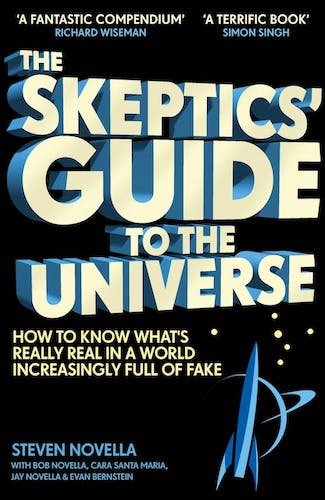
★★★☆☆ The Skeptics’ Guide to the Universe
I want my kids to read this when they get a bit older. Novella’s commitment to skeptical thought is a breath of fresh air. It’s deeply entertaining to read. It’s like a written version of MythBusters but with a lot less filer. My only gripe is one inconsistency in his approach. He really dives into and tears apart most folk beliefs, but seems to make an exception for theories that surround the AI singularity. I think that AI doomerism casts a spell on many hyper-intelligent rationalists and I wish he’d taken off the proverbial gloves and asked harder questions on this topic.

★★★☆☆ The Perfectionists
This was a fun read and I loved that Winchester organizes the book by measures of precision. I didn’t learn anything earth-shattering here, but it was entertaining and I learned lots of factoids along the way. I also came away with a better understanding of just how imprecise most human-made objects are.
★★★☆☆ Rise of the Robots
You’ll be unsurprised to learn that AI is going to steal your job and probably cause the collapse of our society. So, you know, not much to see here.

★★★☆☆ Rise and Kill First
Okay, the premise here is really fascinating. I knew nothing about Israel’s explicit policy of assassination as a tool of the state. From there, I assumed that Mossad and other associated defense agencies must be hyper-competent killing machines. And certainly they have killed a bunch of people, but I came away from the book reaffirmed in my belief that almost all spycraft and covert military stuff hews closer to the depiction of the CIA in Burn After Reading than any Tom Clancy novel.
★★★☆☆ The Wager
Who doesn’t love a good adventure/survival porn book from the age of discovery? That’s right, nobody. If Scorsese and DiCaprio ever actually release a movie based on this material, I’ll definitely watch it.

★★★☆☆ Endless Forms
I hate wasps. And I actually mean to use the word “hate” here. It probably has something to do with the fact that I’ve been stung repeatedly by them over my life and even sent to the hospital due to an allergic reaction. If they at least had the good manners to die when they sting, this penchant for stinging all the time could sort of be forgiven, but no, they aren’t even polite enough for that.
So I was interested to see if Sumner could convince me to abandon my well-deserved dislike of these murder flies. The short answer is no, they’re still beastly and awful. But they are at least more interesting than I had previously understood. Also, most of the wasps you actually see aren’t the aggressive, social species that would actually sting you. So there’s that I guess.
★★★☆☆ Who Gets In and Why
College admissions is pretty borked. This book is probably not worth reading unless you have a kid that’s college-bound, but it' is interesting to get a glimpse at just how subjective the process really is. Also, I’ll be curious to see how long we keep pretending that essays are a valid way to communicate anything of value in a post-ChatGPT world.
★★★☆☆ The Great Displacement
I had hoped that Jake Bittle would go beyond what I had already learned about how climate change would affect people’s lives here in the US. He did add a little color around the edges, but he didn’t try to do any advanced modeling or make any specific recommendations, which was a bit of a letdown. Basically the south and west are pretty much doomed due to desertification, drought, and increasing temperatures. So, nothing new here.
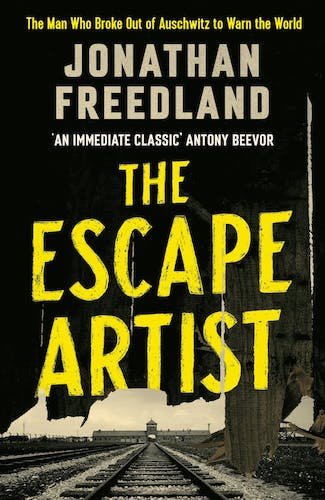
★★★☆☆ The Escape Artist
This was a good read on a topic that I already knew a lot about. I do hope that this book is incorporated into school curricula, though, because it tells a far more nuanced historical account of the Holocaust than is typically discussed.
Didn’t Finish

★★☆☆☆ The World
I wasn’t even able to make it through the introduction. Too long-winded! Get to the point.

★★☆☆☆ All That Moves Us
I thought this one would something akin to Complications, but this wasn’t as well-written and tended towards saccharine, feel-good stories.
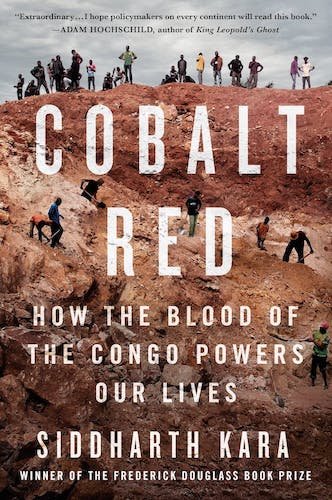
★★☆☆☆ Cobalt Red
I’m a jaded, cynical bastard, but I find it completely unsurprising that big western hardware companies exploit other people in the world and that their suffering is exquisite and completely unnecessary. If you haven’t read about this sort of thing before, this is worth reading about, but I just found it sad to reflect on yet more senseless misery.

★★☆☆☆ The Last Days of the Dinosaurs
I was hoping for lots of science and disaster porn, but instead, got lots of poetic descriptions of late-Jurassic landscapes.
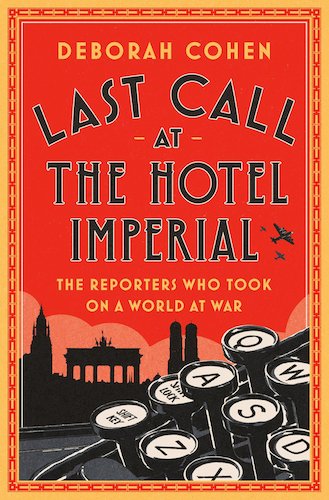
★★☆☆☆ Last Call at the Hotel Imperial
You know that corny 1920s radio announcer voice? Yeah, kinda what it’s like reading this book. I don’t mean that the narration of the audio book sounds like that, but the personalities here are so larger-than-life and so much of their time, it was too much.

★★☆☆☆ The Lessons of History
First, the audio book version of this was ruined by a poorly-recorded interview with Will Durant that’s borderline un-listenable. Second, if you read history or nonfiction books, you’ve probably already figured out most of the lessons they cover.

★★☆☆☆ There Are No Accidents
Felt like an overly-long Atlantic article. The world is unfair and people get hurt as a result of it.
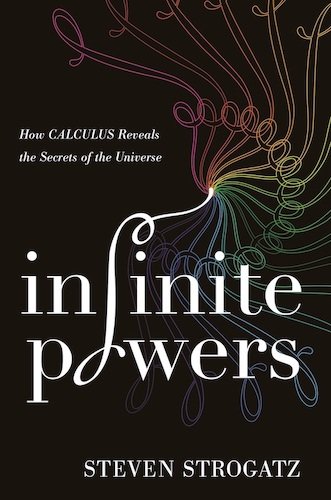
★★☆☆☆ Infinite Powers
If you like math, you’ll probably really like this one. I hated Calculus and I still made it through about halfway, which is a huge vote of confidence. But, at the end of the day, this is a book about math and it’s never been my passion.
7 Things I Believe About the Future

I spent several hundred hours earlier this year researching how best to optimize my family’s investments. We are very conservative about how we invest our money. Most of it is in index funds. I think it is a bad idea to have a portfolio that doesn’t have at least a couple high-risk assets, so I embarked on a project to learn more about riskier asset classes and which would fit our lifestyle and long-term goals.
As I did my research into investing opportunities like cryptocurrencies, rental properties, and REITs, I found myself developing beliefs about how the world will look in 10, 20, and 30 years. What follows are not strictly beliefs about economic or monetary trends, but broader thoughts about the world of the future. There’s no way to know for sure whether I’m right about any of this. The best I can do is show my sources and explain my thought process.
I’m sharing this list in case others find it helpful when thinking about how they leverage their own funds to reach their life goals. At the very least, it’ll be fun to look back and realize just how wrong I was!
1 - Demographic trends will lead to slower economic growth, and aging populations
Among the 196 countries listed in the Wikipedia article for population growth with recent data, only 49 (25%) have population growth above the replacement level of 2.1. [source] But those high-growth countries aren’t very populous in absolute terms. More people live in China than in all 49 of those countries combined.
All but the most optimistic UN global population growth models have total world population leveling off by 2100 or even falling. [source] While that might not sound like a big deal in aggregate, it masks some truly momentous trends that will dramatically impact countries that currently uphold the world order.

The aging of a country’s population isn’t cataclysmic on its own. What’s stark about the coming couple of decades is how quickly this is expected to happen in major industrialized nations. The dependency ratio of a country is the measure of old age to working-age people. In China, for instance, that ratio has nearly doubled in the last 20 years, from 11.4 in 2000 to 20.0 in 2020. [source]
One hypothesis floating around economics textbooks and blogs is that much of the gains in so-called per-capita productivity that lifted billions out of poverty and rapidly grew world GDP in the 20th century were in fact just the tailwinds from a rapidly growing world population of young people. That trend is now reversing, and it’s reversing rapidly. [source] [source] [source]
How much an aging population weighs on economic growth in any country will depend on how that country adapts, but it seems reasonable that this trend will accelerate and become more of a topic for discussion in the coming decades.
2 - Inflation will remain above the 2-3% we currently think of as normal
People have been thinking a lot about inflation this year. With consumer inflation hovering in the mid 7% range, the current inflationary environment has been a big shock to younger adults who didn’t live through the stagflation of the late 1970s. Numerous articles like this one from The Economist and this one from the WSJ have dealt with the subject in a sort of transient sense: will inflation go up or down next quarter? Will the Fed continue to raise rates? I don’t have any answers for these immediate questions, but I do think that there are a lot of factors that could cause inflation to remain above 2-3% over the long-term.
First, the labor force participation rate in the US is falling. In 2002, it was 66%, in 2022, it had fallen to 62%. [source] This trend seems poised to continue as the population of Americans over the age of 65 nearly doubles between now and 2060 [source] and fewer people in most demographic categories choose to work. [source] As this trend continues, there will be relatively more people consuming goods and services compared to the people producing them. [source] In an economy increasingly built on just-in-time fulfillment, low inventory, and sprawling supply chains, even small changes in supply and demand can result in large changes to price and availability (just ask anyone who tried to buy a used car in the last year or two). This could create an environment in which demand from more buyers creates insurmountable upward pressure on goods and services that are difficult to rapidly create more of. Many goods from natural gas to semiconductors require lead times measured in 5 or 10 year increments to dramatically expand supply.

Second, inflationary cycles persist when workers negotiate aggressively for higher wages and that is already being seen in G10 country’s year on year percent wage increases. [source] If this persists, it may be difficult or impossible for the Fed to permanently bring inflation down. This is more of a social/cultural effect, but it doesn’t take long to start the chain reaction: people’s purchasing power is being rapidly eroded and wages aren’t keeping up.
Third, government debt worldwide has tripled in the last 15 years, from approximately $20 trillion to $61 trillion. [source] This quick growth in debt could incentivize central banks to “inflate away” the real purchasing power of their debts by allowing interest rates to remain at historically high levels. This will be especially tempting in the US, which has perverse incentives that other countries don’t face by virtue of being the global reserve currency. Yes, the Fed is an independent, supposedly non-political actor, but this has happened before. Inflation was instrumental in wiping out the massive US government debt from WW2 and the economy experienced >5% yearly inflation for 8 years between 1974 and 1982. Today’s Fed policies are a product of that stagflationary period and Jerome Powell and his predecessors have been more aggressive about maintaining low nominal interest rates than in earlier US history, but there is historical precedent for something like this to occur. [source]
Finally, an aging population implies more people withdrawing from, rather than contributing to, their savings and investments. It also means that existing savings will get shifted from instruments like pension funds and stocks to bonds and cash. As the baby boomers get older and draw down and give away their $71 trillion dollars of wealth [source], the availability of capital to key job producers could shrink. This would cause those corporations to bid up the cost of borrowing, which would put additional upward pressure on inflation. [source]
To be clear on this point, I don’t think inflation in the US will remain extremely high (at the time of writing this paragraph, CPI inflation was ~7%). I think that price inflation will come down, just not all the way to the levels seen before the covid pandemic (2-3%). If I had to hazard a scientific wild-ass guess (SWAG), I’d say that 4-6% seems like it could become the new normal.
3 - Climate change will be very impactful, but not apocalyptic
I think it’s very strange that asset prices haven’t adjusted more to the growing certainty about climate change impacts. I think we now know enough to predict some very specific mega-trends:
Certain vulnerable coastal cities will see increasing damage from tidal flooding, hurricanes and seawater inundation. [source]
Fresh water crises and rationing will become more commonplace in western cities as the Colorado river and other major western reservoirs dry up. [source] [source]
Increasingly destructive wildfires will threaten properties and lives in western cities on a more regular basis. [source]
Fewer and more intense rainstorms will alternately cause drought and flooding in the northern midwest. [source]
Average temperatures across the entire US will rise. [source]
So many books and articles have been written about these trends that I don’t think it’s especially useful to do that here. Suffice to say, we know an awful lot about what is likely to happen to our way of life in the not-so-distant future.
How, exactly, these pressures are incorporated into the fabric of human society remains to be seen. I’ve been actively trying to find books written about these predicted second and third order climate change effects (if you know of any, please send them to me!), but haven’t found any good ones yet. Yet homes continue to be insured on the Miami coastline despite rising rates [source], arid western cities like Phoenix continue to grow [source], and flood control infrastructure on the Mississippi river is reaching its limit with no plans for expansion or overhaul [source].
To counterbalance some of this doom and gloom about climate change, I don’t think the world is going to end in brimstone and fire either - at least not in the next 30 years. Barring some very well-researched arguments about second and third order effects (seriously, send me your book recommendations!) Climate Change is going to unfold slowly. It’ll happen in a geologic micro-second, but our lives fit into geologic nanoseconds, so that’s less horrifying than it sounds.
4 - Unlike other major economic powers, the US alone stands to gain from immigration population growth
The US, Japan, China, and Germany together represent just over half of world GDP in 2022. [source] Among those countries, every country but the US is expected to experience population declines. [source] According to the US census bureau, “net international migration to the United States will become the primary driver of the nation’s population growth between 2027 and 2038.” [source]
Even with the Covid 19 pandemic, this is already starting to be seen in US population data from 2022. [source] As the 21st century continues, immigration will be the critical determinant of whether industrialized countries experience population growth, and thus stave off aging workforces and flat or negative growth.
The US has remained the main destination for international migrants since 1970 [source] and seems poised to experience increased population growth driven by international immigration in the coming 10 to 20 years. A few years back, I wasn’t so bullish on the immigration future of the US. Rising nationalism and stringent immigration barriers remain obstacles to remaining the number one destination for immigrants, but as the recent zero Covid policies in China make clear, living in the US is still a very appealing proposition for the most wealthy and productive humans on the planet. Things would have to get much, much worse in both absolute and relative terms for that to change.
5 - Real rates of return for stocks and other mainstream assets will revert to ~4-5%
This one is a bit of a hot take, but bear with me.
Due to an aging population [see point 1] and higher inflation [see point 2], real global economic growth will slow down through mid-century. The inflation-adjusted rate of return for the S&P has been 7% [source], but over much longer historical time periods, the rate of return has been closer to 4-5%. [source]
This point in particular is always a point of contention in the FIRE communities I frequent. The doomers think that the only safe withdrawal rate is much lower than 4% and secular financial advisors will tell you it’s much higher. I’ve arrived at the approximate 4-5% range primarily by reading a lot about the history of economics and money.
Not every culture and civilization that has relied on fiat currency has settled on the 4-5% number. There’s nothing magical or immutable about it. But for the last 500ish hundred years, Western European societies have experienced growth that fell in that range in real terms and I think there are at least some reasons to believe – barring some massive unpredictable event like WW3, nuclear armageddon, or an AI takeover – that the economic future of America looks a lot more like the 18th and 19th centuries than the 20th. Chief among these are the demographic trends noted above, economic headwinds from climate change, and increasingly wealth inequality.
6 - Remote knowledge work will be remain substantially more common than pre-pandemic
The recession that’s kicking off has caused tech companies to lay off workers and shift the balance of negotiating power back towards management. And managers like working in offices. [source] A retrenchment towards the historical norm of working together was inevitable. The pandemic forced an enormous number of knowledge workers into their bathrobes and living rooms. Far more people worked remotely than would have otherwise done so if given the choice. And that makes sense: even if you like working in an office, the prospect of dying or being hospitalized is enough for most people to forego that preference.
But here we are: those of us that opted to get vaxxed are, those that don’t believe in vaccines didn’t, and we’re all just getting back to normal. It is both healthy and expected that the remote working trend will reverse to some extent.
However, I think the pandemic opened Pandora’s box on this one. Managers who would have absolutely refused to let their teams work remotely, citing certain ruin and company insolvency, were forced to do it anyways for 2 years. And it mostly, sorta worked.
In 2022, 45% of FTEs were working fully or partly remote, with 9/10 remote workers seeking to maintain their remote work to some degree. [source] Although many employers are ramping up their return to work campaigns and the number of remote workers is expected to fall, estimates of the long-term remote workforce range from 16-22% as soon as 2025. [source] [source] That’s a big shift from the pre-covid days when fully remote workers were much more of an oddity in corporate America.
7 - New technologies will continue to lower the costs of living outside dense US urban hubs
For the last several hundred years, humans have been urbanizing at a rapid pace: even in the 1860s, less than 20% of Americans lived in cities. Today, that number is over 80%. [source] The reasons humanity urbanized are many, but some of the biggest were access to economic activity, more leisure time, and access to different social opportunities.
Today, those trends are reversing, but in counter-intuitive ways. I don’t believe the future of America is rural, but I do think the hegemony of the biggest cities and their high-density living patterns will wane as secondary and tertiary markets become more appealing. This will be driven by three factors
Better connectivity. Connectivity outside of America’s largest urban areas is increasing rapidly. Even just in the last couple of years, Americans without access to broadband dropped by 20%. [source] The per megabit cost of internet bandwidth fell 98% between 2000 and 2020 [source] and while the US still has connectivity challenges, 5G [source], Starlink [source], and increasing fiber penetration [source] promise better connectivity than ever before.
An increased cultural acceptance of remote work. See my point above for the full argument, but a whole generation of people have just learned first-hand that remote work is a lot more feasible than it seemed in 2019.
New long-shot technologies reaching commercial maturity. Despite self-driving passenger cars perpetually being “10 years away” [source], Cruise has already logged 600k driverless miles in San Francisco. [source] But even if fully self-driving cars do turn out to be a pipe dream, even just automating highway driving would make living further from a city easier. And self-driving on the highway is a much more realistic goal to achieve in the next couple of years. Tesla’s existing autopilot feature may already be safer than human drivers on highways, although it is hard to fully verify the claim. [source] In other realms, physical goods will become increasingly available at a moment’s notice with decentralized drone shipping. Amazon started an experimental drone delivery service in California last summer. [source] Technologies like air taxis promise to cut commute times into city centers and tie together disparate suburbs into a more consolidated metro area. [source]
Not all of these trends need to be fully realized for my prediction about de-urbanization to come true. In 2022, for instance, most of the fastest-growing places in America were smaller or mid-sized cities rather than already-dominant cities like LA and New York. [source] Within each metropolitan area, I predict an increasing shift to lower-density living in suburbs and exurbs.
As an example, the city of San Francisco lost 6.3% of its residents between 2020 and 2021. [source] Over the same period of time, Manhattan lost 6.6%. [source] Strikingly, neither the Bay Area metropolitan area nor the NYC metro area has seen measurable population declines over the same period of time. [source] [source] People are moving from high density areas to lower density areas in the same metros.
The Covid pandemic kicked it off, but I suspect the trend of moving out of dense city centers and into the adjacent suburbs and exurbs will continue for quite a while. What this means is that places like the New York Metro Area will continue to bloom, attract talent, and be great places to live, but formerly prosperous areas at the very heart of those metros may wither and become less attractive and convenient.
Conclusion
Who knows whether any of these predictions will come true. As I said at the beginning, if there’s one thing that people are really bad at doing, it’s trying to predict the future. But when you are making long-term plans, the only way to do so consistently is to form hypotheses and run with them. These are my hypotheses and I’m looking forward to learning if they were right or wrong.
If you enjoyed this, you should follow me on: