Top 10 Nonfiction Books of 2023 and What They Taught Me

Here are the top 10 nonfiction books I read in 2023 and 3 things that each of them taught me.

★★★★★ An Immense World by Ed Yong

  1. An organism’s umwelt (pronounced “um-velt”) is a description of what they can perceive. Many organisms have such different umwelt that they are essentially existing in different universes without any perception of one another.

  2. It makes no sense to make statements like “a dog’s nose is 10,000x as sensitive as a humans.” Dogs almost certainly perceive the world in radically different ways unrelated to the number of nerve endings in their olfactory bulbs.

  3. Humans only perceive a very narrow range of possible sensory signals. To take a single example, elephants can communicate with one another using subsonic frequencies that are imperceptible to us. In a very real sense, the world is fundamentally different depending on your species.

★★★★★ Chip War by Chris Miller

  1. Only 3 companies in the world are capable of physically manufacturing the most advanced computer chips that power everything from laptop computers to cell phones: TSMC (Taiwanese Semiconductor Manufacturing Corporation), Samsung, and Intel.

  2. Only 1 company in the world is capable of creating the specialized ultra-UV lithography machines that these three chip fabs require: ASML. It’s lithography machines cost $300-400M each. It takes 13 containers and 250 crates to ship a single machine.

  3. Because chip fabrication facilities are so mind-bogglingly expensive to build and run, many companies known for their electronics design (Apple, Nvidia, et al) don’t physically manufacture their own chips. They design chips which are then fabricated by TSMC, Samsung, or Intel.

★★★★★ The School of Life: An Emotional Education

This book defies the pattern of science-y nonfiction. It’s not, in my opinion, especially useful to summarize in bullet form. You’ll have to just check it out and see if you agree with the points.

★★★★★ Generations by Jean M. Twenge

  1. I used to think that generations were a bit like astrology: make-believe concepts that people used to justify pre-existing biases. After reading this book, I realize that view is probably too extreme. There are real differences between differently-aged people. Whether you’re comfortable lumping them together using birth years or not doesn’t have anything to do with large and observable differences in the way those people think and act. So by all means go ahead and disagree with whether “millennials” start in 1979 or 1982, but people born around that time have significantly different life trajectories to people born in the late 1950s.

  2. Younger people’s (Gen Z) mental health started to decline dramatically starting in 2012. A broad consensus is forming that the cause of that decline is due to cell phone use and social networking in particular. The impact has most heavily impacted young women.

  3. The falling birth rate in developed nations is probably being driven by increasingly capable technology, wealth, and social acceptance of individualistic behaviors. The alarmist rhetoric about people not having babies because of climate change or overpopulation don’t hold up under research scrutiny. Most people that don’t have children do it for the obvious reason: children are insanely expensive and inconvenient. In the past, more communal societies distributed the cost of raising kids at the same time that it put pressure on individuals to have families to adhere to social norms. As societies have become more individualistic, the cost of raising kids has skyrocketed for parents at the same time as society has punished adults less and less for choosing not to have kids in the first place. Hence, fewer babies.

★★★★★ Seek and Hide by Amy Gajda

  1. The right to privacy has been a part of English common law in some form or other for hundreds of years. Americans imported it into the original 13 colonies, but enforcement has always been inconsistent.

  2. At the end of the day, the main battles in privacy law enforcement have centered around relatively powerful people attempting to obscure their deeds from the public. US society has gone through periods where it was deemed more and less acceptable to muckrake and expose those secrets. During the late 1790s, for instance, journalists and muckrakers had a largely free hand to malign politicians and businesspeople. During the early and mid-20th century, by contrast, the right of privacy was more strictly enforced and courts ruled more in favor of protecting individual’s private details.

  3. We are currently in what Gadja thinks is the end of a period of particularly lopsided privacy enforcement that protects journalists and internet platforms.

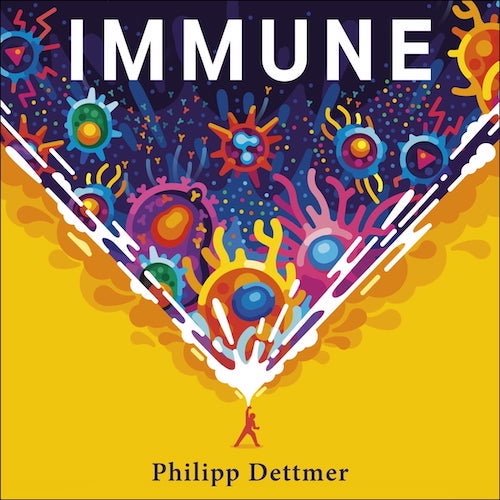
★★★★★ Immune by Philipp Dettmer

  1. The immune system is so dangerous to the body’s tissue that there are an almost mind-boggling number of steps, checks, and safeguards on it’s activation. So, if you ever see a medication that promises to “increase immune response” be skeptical: you don’t want an over-active immune system.

  2. The body keeps a chemical memory of every pathogen it has ever encountered. That “memory” can be activated days, months, or years after first encounter. It also means that if you think of our immune system as a library of sorts, it is one of the most impressive information storage systems.

  3. When your tissue is infected, it becomes warm to the touch. This is a localized version of having a high temperature during a bout with the flu. Scientists currently hypothesize that the added heat does help a bit to kill off pathogenic invaders, but mostly, it’s to facilitate easier and faster protein synthesis for the immune system. Basically, we get warmer when we’re fighting off a bacterium or virus because the immune system can more efficiently create warrior cells at slightly higher temperatures.

★★★★★ The Fall of Robespierre by Colin Jones

  1. Robespierre’s contemporary oratory and rhetoric sounds unnervingly similar to modern populist leaders.

  2. As with most tyrants, Robespierre held onto power through the use of violence and scare tactics. But this was also his undoing. The primary reason he was removed from power wasn’t due to a widespread popular backlash against his methods, it was because other powerful members of the revolutionary government were concerned that he might kill them.

  3. There were many unlikely events that led to Robespierre’s removal and execution. If any one of them had ended differently, there’s a pretty good chance he would have survived and continued running the revolutionary government. In one particularly comedic situation, overwhelming military strength was arrayed against Robespierre’s enemies and it looked like the entire rebellion was over. But the leader of the that military detachment misunderstood how many guards there were in a government building. Fearing a clash with a non-existent enemy and fearing for his own title and office, he chose instead to retreat.

★★★★★ Good Economics for Hard Times by Abhijit V. Banerjee and Esther Duflo

  1. International trade benefits developing nations far more than it benefits the US. The authors estimate that if all international US trade were halted tomorrow, it would only cost American consumers about 2.5% more per year to source all goods and services domestically. This isn’t a good argument to cease international trade, though. Hundreds of millions of people worldwide have better lives due to trade with the US. It is, however, an important fact to keep in mind when creating policy.

  2. One of the primary hypotheses the authors put forward to explain rising income and wealth inequality in the US is a lack of a social safety net. While it seems like an obviously good idea on the surface for recently-laid-off workers in Cleveland to move to San Francisco to take advantage of more plentiful and highly-paid work, most can’t afford to do that. That’s not to say that they are modern day Okies fleeing the dustbowl with no money for gasoline. But expensive housing, a lack of subsidized childcare, and inaccessible health benefits make most disenfranchised workers rationally conclude that it’s better to remain in a place where they have social ties, even if there is no gainful employment. This perpetuates economic inequality. The laid off workers get poorer in small rural towns while coastal knowledge workers get richer in big cities.

  3. In response to growing automation and AI-fueled job destruction, we could significantly increase social stability by offering displaced workers government-subsidized jobs doing work that robots can’t do such as in-person teaching, caring for children, or producing certain kinds of art. The way to identify these heavily-impacted people, however, will be difficult and contentious.

★★★★☆ Entangled Life by Merlin Sheldrake

  1. Most fungi are not visible to us humans. Mushrooms are only the fruiting part of most fungi plants, and not every fungi species distributes it’s reproductive material via the air. The overwhelming mass of fungi on earth are contained in rocks and topsoil.

  2. The whole premise of the video game and TV show The Last of Us is way less far-fetched at a scientific level than I had expected. Seriously, it’s a bit terrifying how advanced and pervasive fungi are and how little we can do to control them.

  3. The root systems of most plants offload the production of necessary chemical symbiotic fungi species. That means that most trees and plant species would be incapable of existing on the planet without fungi.

★★★★☆ When Crack was King by Donovan X. Ramsey

  1. Crack babies don’t exist. Or rather, the impact of crack on pregnancy outcomes was massively over-stated during the late 1980s and early 1990s to fit with a racist narrative of inner city black women and their lifestyle choices.

  2. There is actually fairly solid evidence that the US federal government colluded with large, known cocaine traffickers during the 1980s as part of the Iran-Contra affair. While there isn’t a direct link between entities like the CIA and cocaine distribution in inner-city neighborhoods, the conspiracy theory about the US government using cocaine to control black communities isn’t as misplaced as I had assumed.

  3. The end of the crack epidemic appears to have largely been driven by young people witnessing the ravages of the drug on their communities and abstaining. Ramsey even suggests that influential hip hop artists like Dr. Dre may have intentionally glorified the use of less destructive drugs like marijuana to discourage kids from using cocaine, crack, and heroine.

Other Books I Read in Q4

★★★★☆ Platonic, by Marisa G. Franco

★★★★☆ Stalin by Oleg V. Khlevniuk

★★★★☆ When Crack was King by Donovan X. Ramsey

★★★☆☆ Growing Up Human by Brenna Hassett

★★★☆☆ A Storm of Witchcraft by Emerson W. Baker

★★★☆☆ How to Survive History by Cody Cassidy

★★★☆☆ Gangsters vs. Nazis by Michael Benson

★★★☆☆ What the Ermine Saw by Eden Collinsworth

★★★☆☆ Homegrown by Jeffrey Toobin

★★★☆☆ Under Alien Skies by Phil Plait

★★★☆☆ Things Are Never So Bad That They Can’t Get Worse by William Neuman

★★★☆☆ The Dive by Stephen McGinty

★★☆☆☆ The Declassification Engine by Matthew Connelly

★☆☆☆☆ Fortune’s Bazaar by Vaudine England

★☆☆☆☆ I Know Who You Are by Barbara Rae-Venter


2023 Reading Update

So far in 2023, I’ve read 24 books and gave up on 7. I would have written about all these awesome books earlier, but writing on my new personal finance blog has taken up more of my time than previously.

If you’ve read any good nonfiction books, please pass the recommendations my way. I’m always looking for new material!

★★★★★ Chip War

If you read one book this year, I would recommend this one. The creation of microprocessor chips isn’t just important to techies and nerds anymore. The country that can produce more and better chips will prevail over all other countries. Miller not only describes the incredibly fascinating way in which chips are made, but makes a compelling argument about the hot topic of chip dominance between China and the US. I couldn’t put this one down and now really want to take a tour of a chip fab if I ever get the chance.

★★★★★ The School of Life

The School of Life doesn’t get everything correct, but there’s enough really good wisdom in here to make it a must read. This was initially hard for me to get into because it’s so thoroughly unscientific. At no point does this devolve into the popular science trope of citing social science research. You’re never asked to believe in the outcomes of a study conducted at such and such university that proves that love is real. But I think that’s the key part of the charm: it’s direct and even when it misses, it’s still thought-provoking.

★★★★★ Immune

I remember taking biology 120 in college: it was a big, long, and somewhat boring lecture series. This book is the opposite of that. Philipp Dettmer does an incredible job of making the specific mechanics of our immune systems accessible and fascinating. There’s so much detail in here that I almost immediately forgot most of it, but I came away with a deep, abiding understanding of the absolutely absurd level of complexity built into how our bodies keep us healthy.

★★★★★ The Fall of Robespierre

In my opinion, this is history writing at it’s finest. Rather than describing the events of the French revolution at a high level (booooorrriinnng), he zooms in and tells the deeply human, messy, and interconnected history of how a seminal historical event actually unfolded. What is often described in history textbooks in a couple of sentences and comes across as dry and predetermined here comes alive with ambiguity, reversals of fortune, random strokes of good luck, and human tension. I wish that I was taught this sort of history during my time in school.

★★★★☆ The Making of the Atomic Bomb

This would have gotten 5/5 stars, but good lord does Rhodes take a long time focusing on the history of physics. Easily the first half of the book is just focused on the extremely detailed history of the physicists and experiments that led up to what the title promises: the creation of the atomic bomb. And I get it, the title is about the making of the bomb, but I would have appreciated a longer epitaph about what some of the key figures did after the Manhattan Project. I was especially curious to learn what many thought about their contributions decades later.

★★★★☆ Chaos Monkeys

This one won’t change the way you see the world in a fundamental way, but good lord is it entertaining and accurate. Martinez was a couple of years ahead of me going through YCombinator and working at Facebook. But our experiences overlapped so closely that I feel like I am in a unique position to judge the accuracy of this book. And it is 100% accurate. If you ever wanted to know what it’s actually like to be funded by YC, work at Meta, or just be a techie in Silicon Valley, look no further.

★★★★☆ Barbarians at the Gate

This one deserves it’s reputation as a classic among business books. It’s well-researched, readable, and interesting at a human level. Personally, I think the people most likely to benefit from reading this book are younger people who don’t have a lot of working experience yet. It does a really good job of explaining how business at big corporations is really conducted. Obviously, the cast of characters here were chosen because they are almost caricatures of themselves, but if you’ve worked in corporate America long enough, you’ve met every single person described in these pages.

★★★★☆ Preparing for War

Onishi might be wrong about his primary thesis, but it is at least consistent and may answer a question that’s been on my mind for the last 8 years: why is conservative political ideology so nonsensical? His theory is that most conservative rhetoric is an intentional misdirection from the real truth that the only consistent Republican system of belief is white supremacy. That’s almost certainly an oversimplification for any one conservative person’s system of beliefs, but the shoe does seem to fit the party’s direction at the national level. At the very least, I’d encourage you to read it and make your own assessment of his hypothesis.

★★★★☆ Entangled Life

I had actually been avoiding this one despite the insanely positive reviews. I mean, c’mon, how much is there to know about mushrooms? But I was wrong and the reviews were right: this one really is insanely interesting. If, like me, you thought that fungi were only just mushrooms then you should do yourself a favor and read this book. It was so good that I found myself spontaneously gushing about it to coworkers.

★★★★☆ The Secret Life of Groceries

This book could have easily devolved into another Supersize Me, editorialized expose about grocery stores, but it rises above that. I learned a lot about why Trader Joes is so likable, why it’s nearly impossible for good food to be sold at large box stores, and why the food we eat is neither so terrible as journalists would have you believe or as good as food marketers claim it is.

★★★★☆ John Adams

I love the musical Hamilton. The show briefly covers the Adams administration, but I realized recently that I didn’t really know much about him nor his work. And of course, David McCullough is a nonfiction legend. I’ve read most of his books, and they’re all great.

This might have scored higher with me if I hadn’t accidentally downloaded the abridged version of the audio book. So, don’t do that if you actually want to learn about Adams. Otherwise, I really enjoyed refreshing my knowledge on the founders. I came away thinking that Hamilton was probably the lesser of the two men, but the musical is still great.

★★★☆☆ Dead in the Water

I have a fascination with large boats. I have no idea why. But if you’re like me and maritime shipping and boats are at all interesting to you, this one will definitely keep your turning the pages. It’s about what is probably the largest known maritime insurance fraud that occurred about 15 years ago. It’s got everything you want in a story: a bad guy, a good guy, murder, fraud, extortion, and … big boats.

★★★☆☆ The World in a Grain

I was worried that this book would fall into the category of pop-sci books that became a fad in the mid 2010s. They all follow the same pattern and pitch: Simple Noun: How Simple Noun is Important to Every Person That Has Ever Lived and May Have Killed Your Parents. I’ve read a couple books in this genre and they can be pretty cloying in their fascination with their subject. But this one is significantly better than the rest of it’s ilk. For one, I think Beiser’s point about the importance of sand to the modern world is actually accurate. From concrete to glass to silicon chips, we really do depend on sand quite a bit. And I knew next to nothing about it prior to reading this fun book.

★★★☆☆ Trust the Plan

Given how unhinged the political right has become in the US and the visibility of this particular conspiracy theory to adherents of that ideology, I felt I needed to better understand what QAnon really is about. It turns out it’s even more insane and vapid than I had assumed. I had thought that perhaps, due to the relatively high profile this particular conspiracy theory had attained, there would be more to it than random posts on 4Chan, but …. nope. Having read it, I feel equal parts dismayed and educated.

★★★☆☆ Uneasy Street

I love reading about how people think about and understand money. And this book does a good job of accurately representing how wealthy people understand and cope with their own wealth. This one didn’t cause me to fundamentally reevaluate my life or anything, but it was a fun read and I think Sherman did a good job avoiding the popular “eat the rich” narrative.

★★★☆☆ The Skeptics’ Guide to the Universe

I want my kids to read this when they get a bit older. Novella’s commitment to skeptical thought is a breath of fresh air. It’s deeply entertaining to read. It’s like a written version of MythBusters but with a lot less filer. My only gripe is one inconsistency in his approach. He really dives into and tears apart most folk beliefs, but seems to make an exception for theories that surround the AI singularity. I think that AI doomerism casts a spell on many hyper-intelligent rationalists and I wish he’d taken off the proverbial gloves and asked harder questions on this topic.

★★★☆☆ The Perfectionists

This was a fun read and I loved that Winchester organizes the book by measures of precision. I didn’t learn anything earth-shattering here, but it was entertaining and I learned lots of factoids along the way. I also came away with a better understanding of just how imprecise most human-made objects are.

★★★☆☆ Rise of the Robots

You’ll be unsurprised to learn that AI is going to steal your job and probably cause the collapse of our society. So, you know, not much to see here.

★★★☆☆ Rise and Kill First

Okay, the premise here is really fascinating. I knew nothing about Israel’s explicit policy of assassination as a tool of the state. From there, I assumed that Mossad and other associated defense agencies must be hyper-competent killing machines. And certainly they have killed a bunch of people, but I came away from the book reaffirmed in my belief that almost all spycraft and covert military stuff hews closer to the depiction of the CIA in Burn After Reading than any Tom Clancy novel.

★★★☆☆ The Wager

Who doesn’t love a good adventure/survival porn book from the age of discovery? That’s right, nobody. If Scorsese and DiCaprio ever actually release a movie based on this material, I’ll definitely watch it.

★★★☆☆ Endless Forms

I hate wasps. And I actually mean to use the word “hate” here. It probably has something to do with the fact that I’ve been stung repeatedly by them over my life and even sent to the hospital due to an allergic reaction. If they at least had the good manners to die when they sting, this penchant for stinging all the time could sort of be forgiven, but no, they aren’t even polite enough for that.

So I was interested to see if Sumner could convince me to abandon my well-deserved dislike of these murder flies. The short answer is no, they’re still beastly and awful. But they are at least more interesting than I had previously understood. Also, most of the wasps you actually see aren’t the aggressive, social species that would actually sting you. So there’s that I guess.

★★★☆☆ Who Gets In and Why

College admissions is pretty borked. This book is probably not worth reading unless you have a kid that’s college-bound, but it' is interesting to get a glimpse at just how subjective the process really is. Also, I’ll be curious to see how long we keep pretending that essays are a valid way to communicate anything of value in a post-ChatGPT world.

★★★☆☆ The Great Displacement

I had hoped that Jake Bittle would go beyond what I had already learned about how climate change would affect people’s lives here in the US. He did add a little color around the edges, but he didn’t try to do any advanced modeling or make any specific recommendations, which was a bit of a letdown. Basically the south and west are pretty much doomed due to desertification, drought, and increasing temperatures. So, nothing new here.

★★★☆☆ The Escape Artist

This was a good read on a topic that I already knew a lot about. I do hope that this book is incorporated into school curricula, though, because it tells a far more nuanced historical account of the Holocaust than is typically discussed.

Didn’t Finish

★★☆☆☆ The World

I wasn’t even able to make it through the introduction. Too long-winded! Get to the point.

★★☆☆☆ All That Moves Us

I thought this one would something akin to Complications, but this wasn’t as well-written and tended towards saccharine, feel-good stories.

★★☆☆☆ Cobalt Red

I’m a jaded, cynical bastard, but I find it completely unsurprising that big western hardware companies exploit other people in the world and that their suffering is exquisite and completely unnecessary. If you haven’t read about this sort of thing before, this is worth reading about, but I just found it sad to reflect on yet more senseless misery.

★★☆☆☆ The Last Days of the Dinosaurs

I was hoping for lots of science and disaster porn, but instead, got lots of poetic descriptions of late-Jurassic landscapes.

★★☆☆☆ Last Call at the Hotel Imperial

You know that corny 1920s radio announcer voice? Yeah, kinda what it’s like reading this book. I don’t mean that the narration of the audio book sounds like that, but the personalities here are so larger-than-life and so much of their time, it was too much.

★★☆☆☆ The Lessons of History

First, the audio book version of this was ruined by a poorly-recorded interview with Will Durant that’s borderline un-listenable. Second, if you read history or nonfiction books, you’ve probably already figured out most of the lessons they cover.

★★☆☆☆ There Are No Accidents

Felt like an overly-long Atlantic article. The world is unfair and people get hurt as a result of it.

★★☆☆☆ Infinite Powers

If you like math, you’ll probably really like this one. I hated Calculus and I still made it through about halfway, which is a huge vote of confidence. But, at the end of the day, this is a book about math and it’s never been my passion.

The Top 10 Nonfiction Books I Read in 2022

This year I read 21 books. Here are the best 10. For more on the 11 books I didn’t include, you can check out my Q3 Book Review and my recent Q4 Book Review posts:

★★★★★ The Betrayal of Anne Frank

I first read The Diary of Anne Frank in middle school and I didn’t really understand it. I don’t mean that I didn’t comprehend the facts. I read it and learned about Anne and her family and what they went through in the Second World War.

But it wasn’t until I had kids that I felt like I was able to actually understand the tragedy and heartbreak of their experiences. And until I saw this book on Audible, I had simply assumed that nobody knew who had tipped off the Gestapo to their presence in the annex. I think I had actually gone one step further and made the assumption that it would be impossible to figure out the mystery after so many intervening years.

I was wrong. This book isn’t fascinating because it purports to answer an international mystery known to millions of people. The book is fascinating because of the way in which it does so. I learned a bunch of incredible details about life in Amsterdam in the waning months of WW2 that I had never thought to consider. And that’s ultimately what good history is all about: connecting modern readers to what it was like to be alive at a particular moment in the past with all the mundane, beautiful, and horrific details.

★★★★☆ The Psychology of Money

My rationalist friends hate me for this one, but I think this book is a great set of easy rules of thumb for using money to get what you want out of life. The fundamental premise that Housel takes is that humans are not inherently rational and most of us don’t actually like to think about money all that much. Despite this, almost every living adult has to deal with money. And not just in a transactional should-I-buy-this-book-right-now sort of way, we have to make long-term decisions about how to invest our money, how to care for our aging parents, and how to save for our children’s education.

If you are the sort of person who doesn’t particularly enjoy doing rationalist thought exercises to uncover your terminal beliefs, calibrating the accuracy of your future predictions with statistical models, and better understanding how Monte Carlo simulation work, this book is a great way to develop a healthy relationship with money. Personally, I kinda enjoy all that nerdy stuff, but even I have days when I feel tired and the lessons in this book are good first-approximations of monetary wisdom.

★★★★☆ Allow Me to Retort

Equal parts informative, depressing, and hilarious, Mystal’s analysis of the US Constitution is a great read, especially for folks like me that aren’t steeped in legal history. His central premise is that the US Constitution was an amazing piece of law that worked very well to create one of the most prosperous and enduring democracies the world has ever seen. But it was also written by racist slaveholders that were explicitly not interested in creating a country of equal rights for its citizens. And insofar as we want that kind of a world to exist today, it’s a pretty garbage place to start.

I was raised to revere the US Constitution, and as a snapshot of historic intent that was successful beyond any of it’s writer’s wildest dreams, it’s pretty amazing. But as the founding fathers themselves believed, no single legal document should be expected to endure for centuries without major overhauls and re-writes. Mystal’s suggestions for making those revisions seem appropriate given our current political moment.

The only reason I didn’t give this one 5/5 stars is that Mystal’s writing style is pretty monotonous. I binged this one pretty hard, and I think I just got burnt out on that particular style of delivery.

★★★★☆ How to Be Perfect

As I get older, I find myself thinking more about philosophy and it’s implications for my life. But reading most philosophy books is an exercise is protracted self-punishment. You could be doing something fun, like having your toenails pulled out, but instead you’re stuck trying to figure out what the actual heck Heidegger is trying to communicate.

This is where Michael Shur comes to the rescue. As the author of the wildly funny TV show The Good Place, he takes a hilarious and light approach to the most weighty questions of what it means to be alive. Not only did I laugh most of the way through the book, I actually came away with a functional understanding of the major western philosophical disciplines and how my own personal beliefs adhere to or diverge from those approaches.

This book is like an intro to philosophy lecture and a standup comedy routine rolled up into one. The reason this didn’t get 5 stars is that it didn’t fundamentally change my perspective on life, the universe, and everything. Which is a pretty tall order for any single book.

★★★★☆ The Alchemy of Air

This one details how modern humanity is able to feed all ~8 billion of us. It’s a fascinating story that involves an ardently nationalism German Jew, a savvy industrialist and inventor, and Hitler’s Third Reich. Along the way, I learned about fascinating side topics like how humanity used to rely on bird shit to feed ourselves and how an enormous factory in eastern Germany was briefly the allies’ most important bombing target in the waning months of WW2.

Underneath the historical details, Hager proves himself to be a compelling storyteller and historian. Not only is the book deeply-researched and accurate, he does that rarest of things for a nonfiction writer: he only tells you the most interesting stuff.

★★★★☆ Empires of Light

Before reading this one, I would have told you that I knew a fair amount about how electricity was discovered and commercialized. But to quote George R.R. Martin, “you know nothing, John Snow.” I didn’t realize that Tesla was such a bad businessman. Like, I knew he was no Edison, but wow. And I hadn’t realized that George Westinghouse was such an important and pivotal figure in the story of how we got electric lights. The only reason this one didn’t get the final star is that I feel like I’ve been reading too much about the late 19th century recently and so some of the ancillary topics just didn’t feel as fresh.

★★★☆☆ The Last Pirate of New York

This book won’t redefine how you perceive the world or shake the foundations of your reality, but it’s a damn good book filled with interesting historical details about the city that never sleeps. I learned about the origins of the word “Shanhai’d,” I learned a lot about how murder investigations were run decades before forensic techniques were discovered, and how worldly the past really was. At the end of the day, though, you shouldn’t read it to learn any one particular thing, you should read it because it’s just a great story.

★★★☆☆ Einstein: His Life and Universe

Maybe it’s a bit unfair for me to rate this a 3/5. I knew it couldn’t be a 5-star review because I was already so familiar with Einstein’s achievements and contributions to science. But I felt that I just didn’t know as much as I should about the details of how he came about those achievements. The story of his life is more interesting than I expected and Isaacson does a good job of retelling his major life events with a balanced hand. The one place where I think he came off as being a bit too soft on the man was in the way that he underplayed how hurtful he was to those directly around him. His infidelities were legion and Isaacson brushes them off a bit too gently in my opinion.

★★★☆☆ The Storyteller

I hadn’t realized just how much of the music I grew up on was either directly created by or heavily influenced by a single man: David Grohl. From Smells Like Teen Spirit to Everlong, this guy’s songwriting and musical prowess practically defines a generation. And as you might expect, the stories he has to tell about his life and career are pretty damn entertaining. He’s met every amazing musical artist, he’s performed to tens of thousands of people, and as the title suggests, he’s pretty good at telling interesting stories about it all.

There were two reasons I gave this one 3/5 stars: first, the end of the book is quite a bit weaker than the start. I’m guessing the editor pushed Grohl to hit a certain word count, but that meant including some less-than-riveting stories at the end that kinda devolved into Hollywood-style hero worship. Second, there’s only so much you can rhapsodize about metal/rock music and avoid jumping the shark.

★★★☆☆ The Facemaker

I didn’t know much about reconstructive surgery. I didn’t even know that the term “plastic surgery” doesn’t refer to the material we know today by that name. It was originally used to describe materials like wood and rubber that were “plastic” in that they could be shaped by doctors to replace parts of the body. If you were alive in the 1730s, for instance, getting a wooden peg leg would have been considered “plastic surgery.”

Okay, that’s a fun little trivia tidbit, but the real reason I would recommend this book is that it tells a story that has largely been lost to modernity about what injuries meant to the soldiers who served in World War I.

Conclusion

I’m looking forward to reading more books in 2023. If you have any great recommendations, send them my way. And if you enjoyed this, you should follow me on:

  • Substack - where I summarize the stuff I learn from books like these into 3 minute reads.

  • Twitter - thoughts about economics and technology.

  • LinkedIn - what I’ve learned from being a YC founder and being a PM at Facebook and Google.

Q4 2022 Book Review

Here’s what I read in Q4 2022.

★★★★☆ The Alchemy of Air

This was a really, really good book. The only reason it didn’t get 5 stars is that it didn’t fundamentally change the way I view the world. But it is everything else you’d want from a great nonfiction book: fascinating characters, counter-factual revelations about important events in history, and chemistry. What’s not to like? My wife has gotten tired of me talking about this one, it’s that good.

★★★★☆ Empires of Light

Before reading this one, I would have told you that I knew a fair amount about how electricity was discovered and commercialized. But to quote George R.R. Martin, “you know nothing, John Snow.” I didn’t realize that Tesla was such a bad businessman. Like, I knew he was no Edison, but wow. And I hadn’t realized that George Westinghouse was such an important and pivotal figure in the story of how we got electric lights. The only reason this one didn’t get the final star is that I feel like I’ve been reading too much about the late 19th century recently and so some of the ancillary topics just didn’t feel as fresh.

★★★☆☆ The World For Sale

A decent summary of the world of asset trading. I didn’t know much about the industry prior to reading the book. Going in, I thought that perhaps asset trading was somehow different than other sorts of financial trading, but was disappointed to realize that it’s 99% identical. If you’ve seen The Wolf of Wall Street, you’ve basically read this book already, except that rather than scamming people in the US, asset traders were doing dubious business in developing nations instead. There are some interesting portraits of savants and hucksters in here, which kept it readable.

★★★☆☆ The Storm of Steel

War is hell, but for Ernst Junger, it’s clear that war is also deeply meaningful and important. I found myself more fascinated by Junger than his retelling of his experiences in the trenches of the first World War. He was a decorated German soldier and hard right nationalist, but he didn’t support the Nazis. He was explicitly spared deportation and other depredations by the Nazi leadership because of his stature as a writer and social icon. He wrote scores of books in his lifetime and was a polarizing figure until the day he died. I liked My War Gone By, I Miss it So more as a recounting of someone who finds a home in the experience of war.

★★★☆☆ The Order of Time

I feel pretty confident that I just wasn’t smart enough to really understand whole swaths of this book. Something something the scale of organisms determines how they perceive time’s movement? I think? After reading Einstein’s biography and re-familiarizing myself with his theories of relativity, I think I understood more of the ideas in this book, but it was touch and go for at least 30% of the content. I’d love to discuss this book with someone that’s far better at physics than me to see if I even understood the big points correctly.

★★★☆☆ The Last Pirate of New York

This book won’t redefine how you perceive the world or shake the foundations of your reality, but it’s a damn good book filled with interesting historical details about the city that never sleeps. I learned about the origins of the word “Shanhai’d,” I learned a lot about how murder investigations were run decades before forensic techniques were discovered, and how worldly the past really was. But again, it’s just a great story.

★★★☆☆ Einstein: His Life and Universe

Maybe it’s a bit unfair for me to rate this a 3/5. I knew it couldn’t be a 5-star review because I was already so familiar with Einstein’s achievements and contributions to science. But I felt that I just didn’t know as much as I should about the details of how he came about those achievements. The story of his life is more interesting than I expected and Isaacson does a good job of retelling his major life events with a balanced hand. I think he underplayed how hurtful he was to those directly around him, but I’m just intrinsically judgmental about infidelity.